Last updated: November 03, 2026
Mixed-depth beds are the reason a simple mulch math trick fails, because one flower bed may need 2 inches in a border bed and 3 inches around shrubs, with a garden path edge left thinner.
Estimate each depth zone separately, then add the totals.
The steps below show how to split the bed, price the mulch in bags or by the cubic yard, and avoid overbuying for planting pockets and path edges. In How to Estimate Mulch for Mixed-Depth Beds, the main idea is to measure by zone, not by guess.
Key Takeaways
- One mixed-depth bed is really several small mulch jobs.
- Measure each zone by length, width, and depth before you do any math.
- Use a weighted average only when the whole bed is one shape with different depths.
- Separate planting pockets and garden path edges if they are not mulched to the same height.
- The clearest estimate comes from breaking the bed into rectangles, not from guessing the full bed at one depth.
What a mixed-depth mulch bed means in plain terms

In How to Estimate Mulch for Mixed-Depth Beds, a mixed-depth bed is any bed where one part gets a different mulch layer than another part, such as 2 inches under groundcover, 3 inches in open planting zones, and a lighter strip along a garden path. You do not have one mulch depth; you have 3 depth zones that need separate counts.
That is the whole trick. If you treat the whole bed as one depth, the estimate can drift fast, so check the layout carefully and, if the bed is irregular, consult a professional or local supplier for help. A mixed-depth bed is any bed where one part gets a different mulch layer than another part, such as 2 inches under groundcover, 3 inches in open planting zones, and a lighter strip along a garden path.
A practical way to think about it is by shape first and depth second.
- Break the bed into zones that share one depth.
- Measure each zone on its own.
- Add the results at the end.
This works for a long flower bed, a border bed around a house, or a bed with pockets around larger plants. It also works when the bed touches a path on one side and open soil on the other. The shape can be messy; the math should not be.
Here’s the catch: a weighted average depth can help, but only if you already know the area of each zone. If the bed changes depth in odd spots, the weighted average is a check, not the first move, and a professional can help if the layout is hard to divide cleanly.
How do you estimate mulch for mixed-depth beds?
You estimate mulch for mixed-depth beds by measuring each depth zone, converting each zone to cubic yards or bags, and adding the totals.
That gives a better answer than forcing one depth across the full bed, especially when the bed has planting pockets or a thinner strip near a path.
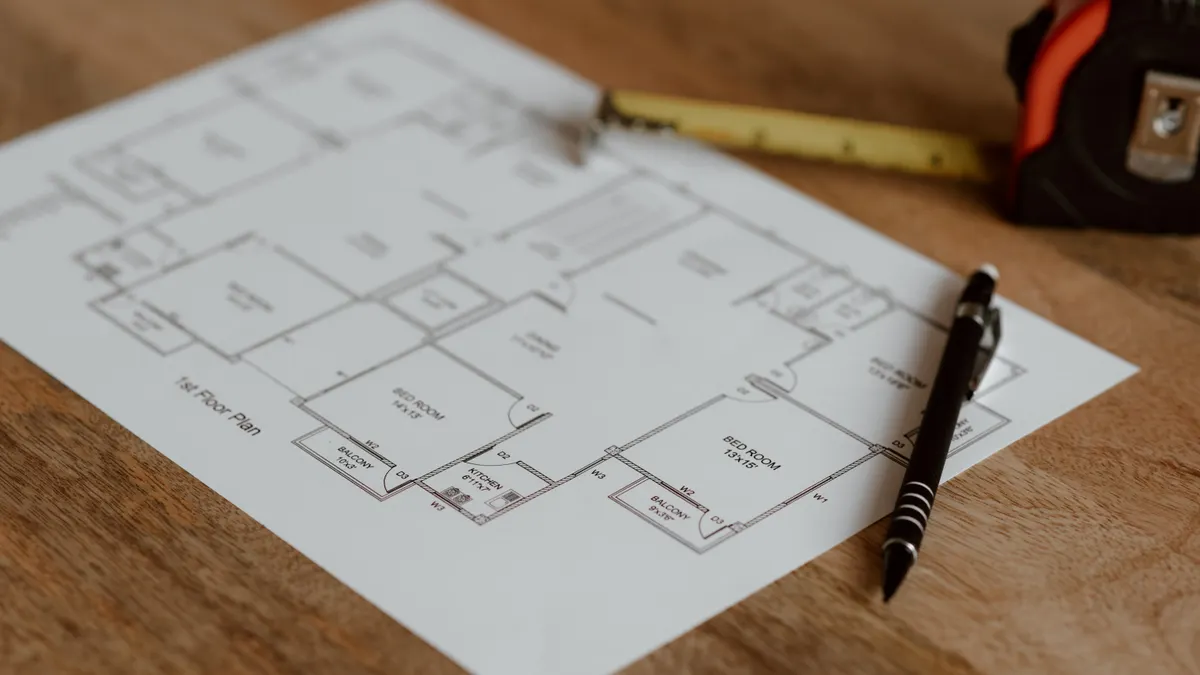
Start with a sketch. It does not need to be pretty. Draw the bed outline, then mark each zone with its depth. A simple rectangle, triangle, or strip is enough for most yards.
Use the same units throughout. If the bed is measured in feet and the depth is in inches, keep that straight before you calculate. A common conversion is cubic feet to cubic yards: 27 cubic feet = 1 cubic yard. That number matters because bags and bulk deliveries are often sold that way, including 1.5-, 2-, and 3-cubic-foot bags sold by many suppliers.
Because of that, you may be wondering about the easiest formula. It is this:
area × depth = volume, done for each zone.
For example, if one part of the bed is 20 square feet at 2 inches and another part is 15 square feet at 3 inches, you do not average the full bed first. You calculate each part, then combine them, following the zone-by-zone method recommended by the National Garden Bureau and extension-based mulch guides.
Use these tools:
- a tape measure
- a notepad or phone notes app
- a calculator
- a sketch of the bed
Follow these steps to get a clean mulch estimate

Since the bed is easier to estimate by zones, measure it as zones, not as one big patch of soil. The answer comes faster when you keep the math tied to the bed shape.
1. Measure the bed outline first
Measure the length and width of each section in feet, then write down the shape. A rectangle, triangle, or strip is enough for most garden beds. This gives you the area before you think about mulch depth.
2. Mark the depth zones on the sketch
Mark where the mulch layer changes, such as 2 inches near small plants, 3 inches in open planting zones, or a thinner strip at the garden path edge. Each zone needs its own label so the count stays honest.
3. Calculate each zone’s area
Calculate the square footage of each zone one at a time. A rectangular section at 10 by 4 feet gives 40 square feet; a long strip at 2 by 12 feet gives 24 square feet. Keep the zones separate.
4. Convert each zone to volume
Convert each zone from square feet and inches of depth into cubic feet, then into cubic yards if you are ordering bulk mulch. Use the same conversion for every zone so the numbers line up cleanly.
5. Add the zone totals
Add the volumes from all zones together. That total is your bed’s mulch estimate, and it should be close to what you need before you buy bags or schedule a delivery.
6. Round up for settling and touch-up
Round up a little if the bed has uneven soil, root flare clearances, or spots where mulch will be thinned near a path. A small cushion saves a second trip and covers low spots after the mulch settles.
How to use a weighted average depth without fooling yourself
A weighted average depth is useful when the bed is one continuous shape and only the mulch depth changes across parts of it.
It is not a shortcut for skipping measurements, because the weight comes from the size of each zone.
Here’s the clean version. Multiply each zone’s area by its depth, then divide the total by the full bed area. The result is the single depth that matches the mixed-bed estimate. If the answer is 2.6 inches, that does not mean every part should be mulched at 2.6 inches; it means the mixed pattern equals that much mulch across the full area.
Use this for quick checks and order planning, but not as a substitute for zone counts. It is also where mistakes happen. A small planting pocket at 4 inches can distort the average if you treat it like a big zone, even when it covers only a little area, so consult a professional if the layout is hard to separate.
The best part is that you can use the weighted average to sanity-check your total without changing how you mulch the bed. If the average seems too high or too low, the zone math usually shows why.
Use weighted average when:
- the bed is mostly one shape
- the depth changes in clear bands
- you already know each zone’s area
Skip weighted average when:
- the bed has many tiny pockets
- path edges need a different treatment
- one part is mulched and another part is left bare
What changes when the bed has planting pockets or path edges?
Planting pockets and path edges should be counted separately if they use different depths or are left partly clear.
That prevents a border bed from being overcounted where mulch should stay away from stems, walkways, or steps, and extension guidance commonly recommends keeping mulch away from stems and trunks.
A planting pocket is a small open area around a plant, often in a bed with shrubs, perennials, or young trees. If those pockets need a thinner mulch layer or no mulch at all, do not fold them into the main bed depth. Count the pocket as its own zone.
The same rule applies to a garden path edge. If mulch tapers off before the path or gets thinner to keep it from spilling, measure that strip separately. A narrow strip at 1 inch is not the same job as the main bed at 3 inches.
That split matters most in beds with changing grade. A low spot may need more mulch to reach the same look, while a raised edge may need less. If the bed has two or more clear depth changes, each change deserves its own line in the notes.
Count separately when:
- mulch stops at the path edge
- plants need bare rings or thinner coverage
- one section is much deeper because of low soil
- the bed changes depth more than once
Common mistakes that throw off the estimate
The biggest mistake is using the largest depth across the whole bed.
That often overbuys mulch, and in a mixed-depth bed it can miss by a lot because the deeper section gets applied to the shallow section too.
Another mistake is measuring the whole bed, then guessing the depth split later. That sounds fast, but it creates a bad estimate because the zone sizes are the real driver. A 3-inch strip and a 2-inch strip are not interchangeable if they cover different square footage.
A third mistake is forgetting that paths and planting pockets change the math. If a bed touches a garden path, the edge often needs a different number than the center. If you ignore that, the mulch order can come in short or too heavy.
Use this quick check before you buy:
- Does every zone have a square-foot figure?
- Does every zone have a depth in inches?
- Did you keep the path edge separate?
- Did you add the zone totals, not average them by eye?
If any answer is no, the estimate is not finished yet.
A simple worked example for a mixed-depth flower bed
Picture this: you’re estimating a flower bed with one long front strip, a deeper planting zone behind it, and a thin path edge on one side. The goal is not fancy math; it is a total that matches the bed you actually have.
Say the bed has three zones:
- Zone 1: 24 square feet at 2 inches
- Zone 2: 18 square feet at 3 inches
- Zone 3: 6 square feet at 1 inch near the path edge
You would calculate each zone on its own, then add them. The shallow strip stays separate from the deeper center, and the path edge does not get treated like the rest of the bed. That is the whole point of estimating a mixed-depth bed.
If the bed also has a few planting pockets, make a separate line for each one. A pocket that is only a small cutout can still change the total enough to matter when you order bags or bulk mulch.
The truth is, most mulch estimates go wrong because people try to make one number do three jobs. Once the bed is split into zones, the estimate gets much easier to trust.
What to do before you place the order
You should review the zone list, the total volume, and the delivery size before you buy mulch.
That final check keeps a mixed-depth bed from turning into either a shortage or a pile of extra mulch.
Look at the bed one last time and ask three questions:
- Did every zone get a width, length, and depth?
- Did you separate the planting pockets and path edge?
- Did you add the zones into one total before rounding up?
If you are ordering bags, check the bag size against your total before you count how many to buy. If you are ordering bulk mulch, keep the total in cubic yards and round carefully. A little extra is easier to use than a short delivery.
You can also compare the final number with the hub on mulch calculator basics if you need the wider rules for bed sizing and measurement. This page is for the mixed-depth problem specifically; the hub covers the larger calculator setup.
Can one bed have two mulch depths?
Yes. A single bed can have two or more depths if the planting layout changes across the bed. The clean way to handle it is to measure each depth zone separately, then add the totals. That keeps the estimate tied to the real shape of the bed instead of a single guess.
How do you calculate a bed with different depth zones?
You calculate each zone as its own area and depth, then combine the results. Start with the square footage of each zone, apply the depth for that zone, and add the volumes at the end. A weighted average can check the math, but it should not replace the zone counts.
Should paths and planting pockets be counted separately?
Yes, if they use different mulch depths or are left thinner than the rest of the bed. A garden path edge and a planting pocket often need their own line in the estimate. Treating them separately gives a cleaner total and avoids overbuying mulch where it does not belong.
Drafted with AI; not yet reviewed by a person.
Leave a Reply