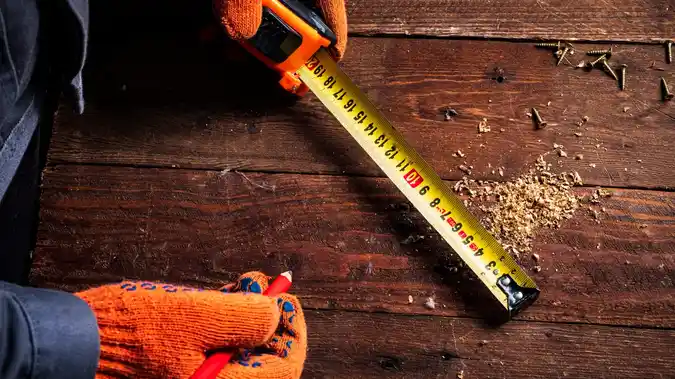
Last updated: November 03, 2026
Key Takeaways
- Split the bed, subtract blocked areas, then convert what remains into mulch volume.
- Two or three rectangles is often the quickest practical approach for an uneven bed.
- Measure each step, pier, or other fixed object as a footprint, then remove that area.
- A cutout is an opening where mulch stops, such as around a utility box, drain, or corner.
Beds with steps, piers, and cutouts need a subtraction-first estimate, not simple length-times-width math. Measure the full bed, subtract each fixed object, then figure out the mulch depth you want.
The steps below settle the area math, cutout math, and partial coverage for an obstructed landscape bed. In this article on how to estimate mulch for beds with steps, piers, and cutouts, the goal is a practical estimate you can use before you order.
Estimate mulch for an obstructed landscape bed
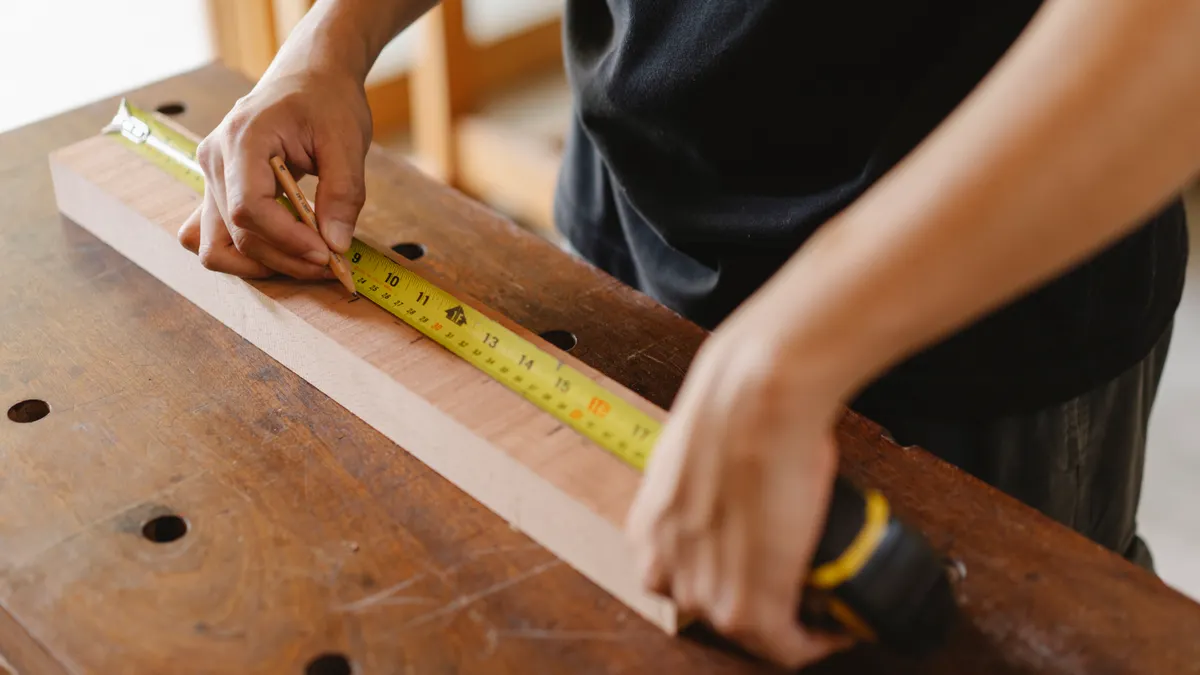
Picture this: you’re standing at a bed with a brick step, two piers, a utility box, and a downspout cutout, trying to order mulch without guessing. The clean way is to split the bed into rectangles, subtract the blocked spots, then convert the remaining square footage into mulch volume.
Here’s the catch: a bed that looks simple from the driveway is often chopped up by hard edges. If you ignore a 3-foot-wide step or a 2-foot-square pier base, you’ll overbuy. If you skip a cutout around a utility box, you may underbuy by a bag or two.
- Measure the tape from edge to edge along each straight run, then write down every rectangle you can see in the bed.
- Sketch the bed on paper, and mark steps, piers, utility boxes, downspouts, and patio corners as separate shapes.
- Subtract the non-mulched areas from the full bed area before you calculate depth.
- Convert the finished square footage into mulch volume using the depth you plan to spread.
- Round up for raking loss, settling, and small gaps around hardscape.
A 4-inch layer is not the same as a 2-inch layer. That one detail changes the order.
Break the bed into rectangles before you touch the calculator
Picture this: you’re staring at a bed that runs 18 feet along the house, then jogs around a pier and ends at a patio corner. The quickest practical route is to break it into 2 or 3 rectangles instead of trying to trace every notch in one shot.
Measure each straight section in feet. Then multiply length by width for each rectangle and add the totals. If a section is blocked by a step, don’t measure through the step—stop at the edge of the mulchable space.
- A bed that is 12 feet by 4 feet is 48 square feet.
- Two joined rectangles, such as 10 by 4 and 6 by 3, are added after each area is found.
- A narrow return that is only 18 inches wide still counts if it will hold mulch.
The truth is, this method works because mulch is spread by area, not by the shape you wish the bed had. A clean rectangle is easy. A bed with interruptions is still workable if you separate the parts first.
How do you subtract steps, piers, and other fixed objects?
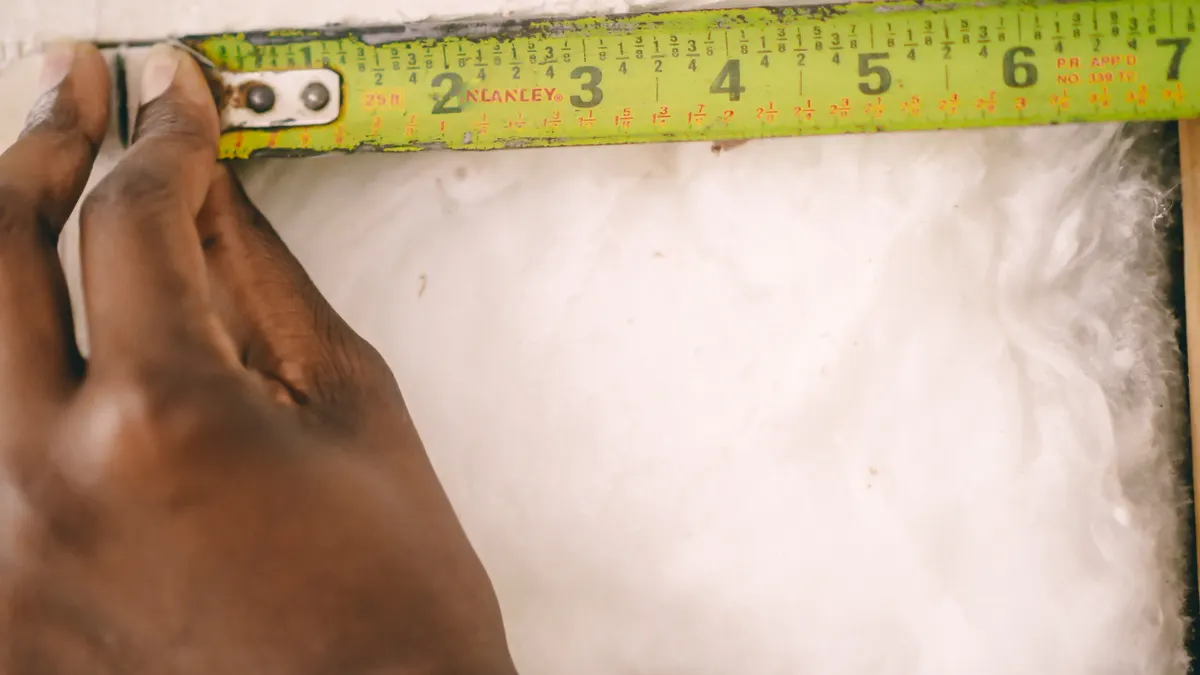
You subtract them by measuring each object like a hole in the bed, then removing that square footage from the total. A step face, a pier footprint, a utility box pad, or a downspout splash block all reduce the mulchable area.
Start with the object’s outside measurements. If a pier is 2 feet by 2 feet, that takes up 4 square feet. If a step landing is 5 feet by 3 feet, that takes up 15 square feet. Subtract those numbers from the bed area you calculated first.
Since the bed may be broken up by several obstacles, use a second sheet of paper if it has more than 3 interruptions. That keeps the math clear.
| Fixed feature | What to measure | What to subtract |
|---|---|---|
| Pier | length × width | its footprint area |
| Step or landing | front edge × depth | the flat surface that won’t hold mulch |
| Utility box | outer border only | the exposed no-mulch area |
| Downspout outlet | the cleared circle or square around it | the open service space |
| Patio corner | the missing triangle or rectangle | the space left bare |
On the flip side, don’t subtract a stone edge or metal edging if mulch still sits against it. Only subtract the space you truly cannot mulch.
What counts as a cutout, and how do you measure it?
A cutout is any planned opening in the bed where mulch stops, such as around a utility box, a drain, or a tight patio corner. Measure the opening itself, not the object sitting in it.
If the cutout is square, use length times width. If it is round, use the widest point and treat it as a square for a practical estimate. For a more exact round opening, check guidance from your supplier or a landscaping professional before ordering. A 12-inch by 12-inch opening is easier to estimate than a circle, and for mulch ordering that rough math is usually enough. The USDA’s mulch guidance also supports keeping mulch away from trunks and sensitive features rather than piling it directly against them, which reinforces careful measuring around openings. USDA NRCS
- Measure the cutout’s widest dimensions in feet or inches.
- Draw the cutout on your sketch so you can see how much space it removes.
- Add all cutouts together before subtracting them from the bed.
- Leave a little working room around utility access so mulch does not bury the lid.
A cutout around a downspout is not decorative space. It is a service space. If the opening is too small, mulch slides back in and the area looks messy after the first rain.
How much mulch do you need after the subtraction?
You need the remaining square footage multiplied by the depth you want, then converted into bags or yards. The common depths are 2 inches for a light top-up and 3 to 4 inches for fuller coverage.
For a quick estimate, many mulch calculators and retail coverage charts use the same basic conversion: 1 cubic yard covers about 324 square feet at 1 inch deep. At 2 inches, that same yard covers about 162 square feet. At 3 inches, it covers about 108 square feet. At 4 inches, it covers about 81 square feet. See the University of Florida IFAS Extension for mulch depth and coverage basics, and check your product label for bag coverage. UF/IFAS Extension, NC State Extension
So if your net bed area after subtraction is 100 square feet and you want 3 inches of mulch, you need just under 1 cubic yard. If you want 4 inches, you need a little more than 1 cubic yard.
A bagged product changes the count, but the math does not. Convert the net area first, then divide by the bag coverage on the label.
How do you handle partial coverage near steps and patio corners?
You handle partial coverage by measuring only the mulchable strip and not the whole visual shape. A 2-foot strip beside a step is still mulchable, but a 6-foot slab edge is not.
This matters most at patio corners and step returns. You may have a bed that looks large from above, but the usable part is only a thin band. Measure that band in feet, not in guesses. If a corner leaves a triangle, use the triangle’s base and height to estimate the missing area.
A simple field rule helps:
- Measure the full run.
- Stop at the hard edge.
- Measure the open return separately.
- Add only the pieces that accept mulch.
A common mistake is counting the whole corner because “it’s part of the bed.” It isn’t part of the mulch area if a slab, step, or pier blocks it.
What mistakes throw off mulch estimates on beds with obstacles?
The biggest mistake is measuring the outside outline and forgetting the blocked middle. That can leave you short on mulch or stuck with extra bags that never get used.
A second mistake is using one blanket depth everywhere. If the bed narrows to 18 inches near a pier but is 4 feet wide elsewhere, the same depth still works, but the volume changes fast as the width changes. A third mistake is ignoring small cutouts around utility boxes and downspouts.
Use this short check before you buy:
- Did I split the bed into rectangles?
- Did I subtract every pier, step, and cutout?
- Did I use the actual depth I plan to spread?
- Did I round up a little for settling?
Once you do this once, the next estimate goes much faster. The bed still looks messy to the eye, but the math becomes plain.
Which measuring tools make this easier?
A 25-foot tape measure, a pencil, graph paper, and a calculator are enough for most beds with steps, piers, and cutouts. A chalk line can help if the bed edge is hard to see, and a phone camera helps you match the sketch to the site later.
Measure in the field, then sketch on paper right away. If you wait, you’ll forget which notch was 2 feet deep and which one was 30 inches wide. A rough drawing with labeled sides is better than a neat drawing with guessed numbers.
If the bed has more than 5 distinct parts, make two sketches: one for the full bed and one for the subtractions. That keeps the math readable and helps when you compare bag counts or cubic yards.
The guide to mulch calculator basics gives the general area rules. This page is the one to keep open when the bed has fixed objects that break those rules. See also the mulch calculator basics guide and the landscape edging guide for related measuring help.
FAQ
Do you subtract hardscape from mulch area?
Yes. Any part of the bed that is occupied by a step, pier, utility box pad, or other fixed hardscape should come out of the mulch estimate. Measure the obstacle’s footprint and subtract that area before you convert to mulch volume.
How do you measure around fixed obstacles?
Measure the bed in pieces, not as one shape. Mark each obstacle, measure the open space around it, and keep a separate note for every cutout or blocked section.
What counts as mulchable space?
Mulchable space is any exposed bed area where mulch can actually sit and stay in place. A strip beside a step counts if it’s open, but a pier base, utility access lid, or patio slab does not.
Drafted with AI; not yet reviewed by a person.
Leave a Reply