
Last updated: November 05, 2026
Quick answer: estimate mulch for winter storage until spring by measuring the beds first, converting the total to cubic yards, and reserving a dry storage spot before you buy. A 3-cubic-yard pile can fit the math and still need more room than bags. This guide covers how to estimate mulch for winter storage until spring in a way that keeps the order and the storage plan aligned.
Key Takeaways
- Estimate mulch for winter storage by measuring the spring area, converting it to cubic yards, and rounding up for the pile.
- A winter mulch pile needs a flat, dry spot with extra room because loose mulch does not stack like boxes.
- Store mulch until spring on a clean surface, with a tarpaulin that protects the pile without crushing it.
- If you know the square footage and the depth, storage planning is the next step.
You need to know how much mulch to buy and where it will sit from winter to spring without crowding your driveway or garage. Estimate by area first, then add the storage space the pile will need before you order. The steps below settle the math, the cover, and the space reservation.
How much mulch should you estimate for winter storage until spring?

Estimate mulch for winter storage by calculating the spring area first, then converting that area into cubic yards and rounding up for the mulch pile. If you store it loose under a tarpaulin, plan for the pile to spread wider than the finished order will sound on paper.
Picture this: you’re looking at an empty corner of the driveway in November and trying not to overbuy. The answer is not a guess; it’s the square footage of the beds, the depth you want, and the storage footprint that pile will take up. That is the number that keeps you from hauling too little or blocking the garage door.
- Measure the garden beds, tree rings, or border strips you want covered in spring.
- Multiply length by width for each bed to get square feet.
- Choose a mulch depth, usually around 2 to 3 inches for storage planning.
- Convert the total square feet and depth into cubic yards for the order.
- Round up the final number so the stored pile covers settling and spring top-offs.
A small bed can hide a mistake. A large one will punish it. If you undercount by even one cubic yard, spring turns into a second delivery fee or a rushed store run.
Here’s the catch: winter storage changes the layout, not the math. A 3-cubic-yard order is still 3 cubic yards, but it will occupy a larger, rougher space in a pile than it would in neat bags. Plan for the pile shape, not just the order size.
- Depth matters. A 2-inch layer and a 3-inch layer are not close.
- Round up once. Two small underestimates are how people end up short.
- Leave access. You still need room to walk, shovel, or wheelbarrow around the pile.
What space does a winter mulch pile need in a driveway or garage?
A winter mulch pile needs a flat, dry spot with extra room around it, because loose mulch does not stack like boxes. If you are storing bagged mulch, the footprint is tighter; if you are storing bulk mulch, assume it will spread and slump.
Picture this: you’re choosing between the driveway and the garage, and both seem half full already. The deciding factor is not just square footage. It is whether you can still open a door, park a car, and reach the pile in February without dragging mud through the house.
A driveway is often the easier choice because it can take a loose stack, a pallet, or a tarp setup. A garage works better for bags or a smaller bulk pile that stays clear of walls, tools, and appliances. If you need the space for a vehicle every day, do not pretend it can double as storage for months.
Use the pile itself as the reference point:
- A loose pile needs extra width at the base.
- A covered pile needs room for the tarp to drape and be secured; if the fit is unusual, consult a professional or supplier.
- A bagged stack needs space for air flow and access from at least one side.
The best part is that you do not need perfect precision here. You need a realistic rectangle you can actually spare from winter through spring. If the only available space is tight enough to force constant reshuffling, the estimate is too optimistic.
One thing to avoid: placing the pile where meltwater runs across it or where tires will crush the edge each week. That does not save space. It makes a mess and shortens the useful life of the pile. For long-term planning, a corner that stays out of the way is better than a spot that looks neat for two days.
- Garage use fits smaller amounts and bagged stock.
- Driveway use fits bulk piles and easier spring access.
- Wall clearance matters if the pile will be touched repeatedly.
How do I store mulch until spring?
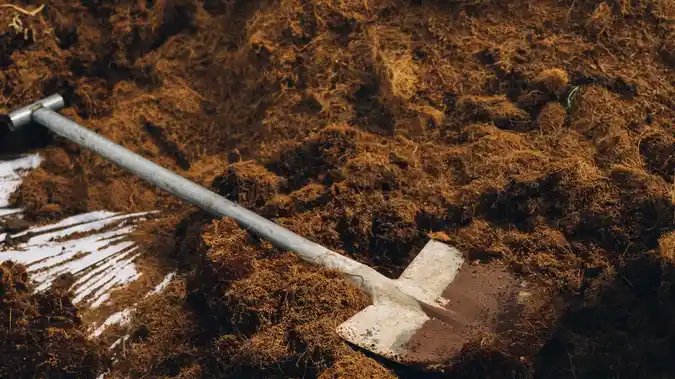
Store mulch until spring by setting it on a clean surface, covering it with a tarpaulin, and keeping the cover loose enough to avoid crushing the pile. The goal is not to seal it like a bucket; the goal is to keep the pile organized, dry enough, and easy to reach later.
Picture this: you’ve bought the mulch in fall because spring will be busy, and now you need it to sit for months without becoming a frozen lump. The setup needs three parts: a base, a cover, and access. Miss one, and spring gets harder.
Start with a flat base so the pile does not pick up dirt, ice, or standing water. A pallet, pavers, or another raised surface works better than bare soil. Then place the mulch and cover it with a tarpaulin that sheds water and can be pulled back without tearing the pile apart. If the base or cover is unusual, consult a professional or supplier before you stack it.
A good storage setup also leaves a path to the pile. If you know you will wheelbarrow it into beds next season, do not wedge it behind snow shovels, lawn equipment, or a parked car. That mistake costs time every time the weather turns bad.
A simple winter storage setup usually looks like this:
- Base: flat and raised enough to keep the pile off wet ground
- Cover: tarpaulin large enough to overlap the edges
- Access: a clear path for spring handling
- Space: enough room for the pile to remain unchanged for months
On the flip side, a too-tight wrap can trap a sloppy edge and make spring handling harder. You want a cover that protects the pile without turning it into a sealed block you have to hack apart later.
Sources to check
- The U.S. Environmental Protection Agency’s composting and yard waste guidance is useful for basic material handling principles.
- The National Mulch and Soil Council’s material pages can help with terminology and product types.
How do I estimate mulch for winter storage until spring?
Estimate mulch for winter storage until spring by working backward from the spring beds, then adding a buffer for settling, edge touch-ups, and the way loose material occupies more space in storage. If you know the square footage and the depth, the rest is a storage decision.
Picture this: you’re standing in the yard with a tape measure and a notepad, trying to buy once and store once. The cleanest estimate comes from one question: how many square feet will you cover, and how thick do you want the layer to be? From there, the stored amount is just a rounded order size.
Use this order of operations:
- Measure each bed in square feet.
- Choose the mulch depth you want for spring application.
- Convert the total to cubic yards or bag count.
- Add a small cushion for uneven beds and hand-spread losses.
- Reserve storage space for the pile shape, not just the purchase amount.
A common planning mistake is to buy for the beds but ignore the storage footprint. Six bags may sound compact, but a bulk pile with the same amount needs room to sit without being walked through or pinned by tires. That matters from November to March.
If you already know the spring project is likely to expand, estimate the larger number now. A little extra mulch is easier to hold in storage than to source mid-season. A shortage, by contrast, forces you to buy at a bad time and possibly from a different supplier.
Keep the estimate honest:
- If the beds are not fully measured, do not count them.
- If the spring layout may change, plan for the larger version.
- If the storage space is tight, buy in smaller lots instead of one oversized load.
The truth is, this is the point where most people either overbuy or underbuy. Overbuying creates a bigger storage problem. Underbuying creates a spring shortage. The better answer is the amount that fits both the beds and the place you have to keep it.
What mistakes cause bad mulch estimates in winter?
Bad mulch estimates in winter usually come from measuring only the planting area, forgetting the pile footprint, or leaving no room for access next season. Those errors cost space now and time later, which is why they show up as clutter in the driveway or a second trip in spring.
Picture this: you’ve got the right amount on paper, but the pile blocks the side gate, the garage door, or the path to the bins. The math was fine. The storage plan was not. Winter exposes that mistake because the pile sits untouched long enough to become an obstacle.
The biggest misses are easy to name:
- Measuring in inches when the yard is better planned in square feet; if the layout is complex, consult a professional or supplier.
- Skipping the buffer for settling and uneven spread
- Ignoring access for wheelbarrow, shovel, or hand loading
- Treating the garage like a warehouse with no other use
- Assuming the cover solves everything instead of planning space first
Each mistake has a cost. A short order means a second purchase, which is worse if the exact mulch color or product is no longer available. A crowded storage spot means the pile gets kicked, moved, or split apart before spring. That makes the job slower and messier.
Do this instead:
- Measure the beds first.
- Write down the storage location before buying.
- Mark the pile’s footprint on the driveway or garage floor.
- Keep one clear side for spring access.
- Buy only what the space can hold cleanly.
That last step is where many people save themselves. If the space can hold 4 cubic yards but your math says 5, the right answer is usually to split the order or delay part of it, not cram it in.
How should I plan a winter mulch purchase?
Plan a winter mulch purchase by matching the spring need to the storage place you already have, then choosing bagged or bulk mulch based on what fits that space. The best purchase is the one you can keep through winter without turning your driveway or garage into a choke point.
Picture this: you’re comparing a full pallet, a loose pile, and a stack of bags, and each one changes the way the winter will feel. The purchase plan is not just about price or quantity. It is about how long the mulch must sit, how easy it will be to reach, and how much room you can spare.
A winter purchase works best when the storage plan is clear:
- Bagged mulch fits smaller, tighter spaces and keeps the pile tidy.
- Bulk mulch makes sense when you have a wide, stable place to store it.
- Deferred use means the mulch needs to stay reachable for weeks or months.
If you are buying for spring but storing now, look at the calendar as part of the estimate. The longer the hold time, the more important the storage location becomes. A pile that looks fine for one weekend may be a nuisance by late February.
This is also where space reservation matters. Keep the area open before the order arrives, not after. A mulch delivery that lands in a spot you still need for winter traffic creates a mess no tarp can fix. That is why the winter purchase starts with measuring the yard, then the storage spot, then the order.
If the space is uncertain, buy in smaller stages. If the space is solid, buy once and store once. The article on mulch purchasing, delivery, and storage logistics on the site covers the broader planning flow and sits above this page in the decision chain.
Can mulch sit through winter?
Yes, mulch can sit through winter if it is stored in a way that keeps the pile in place and accessible. The main issue is not the season itself; it is whether the pile has a stable base, a cover, and enough room in the storage spot. If those three things are missing, winter tends to make the problem worse.
How should I store mulch until spring?
Store mulch until spring by putting it on a clean, flat base, covering it with a tarpaulin, and leaving room to reach it later. A garage works for smaller amounts, while a driveway is often better for a bulk pile. Do not trap it in a spot you will need to clear every week.
How do I plan a winter mulch purchase?
Plan a winter mulch purchase by measuring the spring beds, converting the area into the needed amount, and checking the storage space before you buy. If the space is tight, choose a smaller order or split the purchase. If the space is open, buy the full amount and reserve that spot until spring.
Drafted with AI; not yet reviewed by a person.
Leave a Reply