Last updated: November 01, 2026
Quick answer: In this guide to How to Choose Mulch for Shade, Sun, and Dry Soil, the best mulch choice usually comes down to moisture loss: bark mulch or pine bark often suits shade, while wood chips are often better for sunny, fast-drying beds. A 2- to 3-inch layer is the usual home-landscape range.
Garden mulch is not one-size-fits-all: bark mulch and pine bark tend to suit shaded beds and steady-moisture planting, while wood chips and shredded mulch usually make more sense in sunny beds and dry spots where water loss is the real problem. The right choice depends on how much heat hits the bed, how fast the soil dries, and whether you need the cover to hold moisture, moderate temperature, or simply look tidy.
I write about landscape materials and planting conditions, so I look at mulch the same way a good gardener does: by microclimate first, appearance second. For this topic, How to Choose Mulch for Shade, Sun, and Dry Soil is really a question of matching the cover to the bed’s moisture demand.
Key takeaways
- Shady beds usually reward finer, slower-moving covers that help soil stay evenly moist.
- Sunny beds need something that resists drying and does not disappear into the soil too quickly.
- Dry spots favor thicker-textured organic cover, especially where water loss is the main issue.
- Bark mulch, pine bark, wood chips, shredded mulch, and leaf mulch all behave differently once heat and moisture change.
- If a bed gets sun for much of the day and the soil already runs dry, a coarse organic mulch is often a safer default than a fine decorative layer.
- The usual working depth for organic mulch in home landscapes is 2 to 3 inches.
The real difference between shade and sun is moisture loss
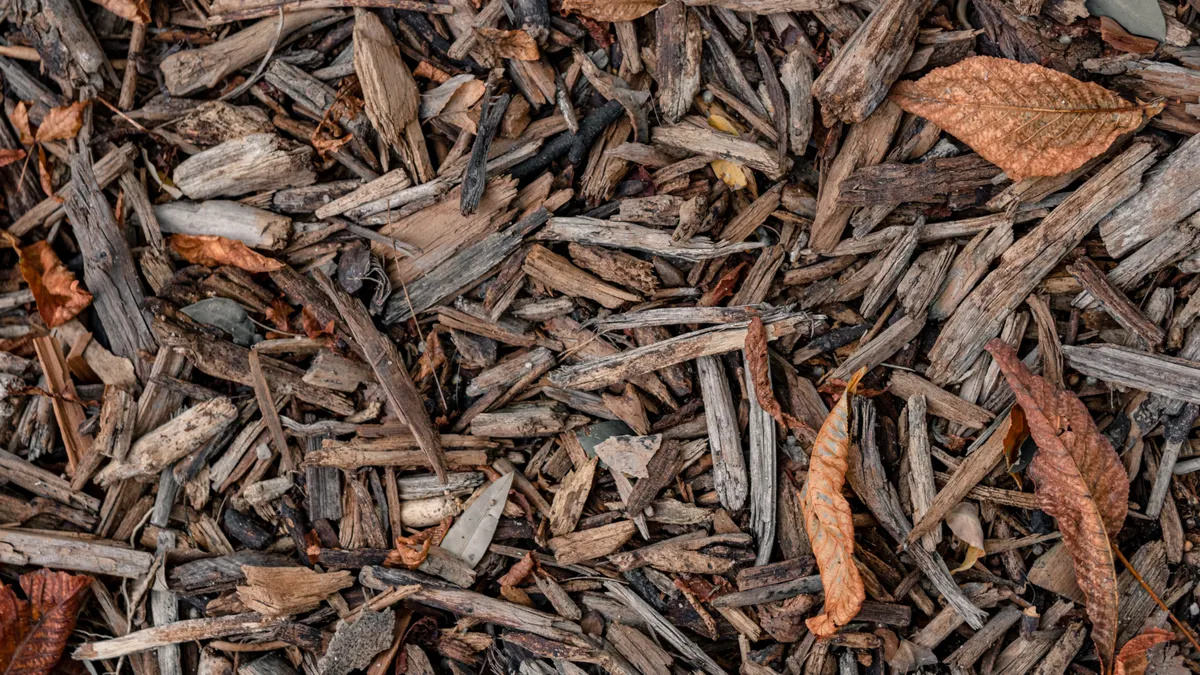
Shade wins on moisture retention; sun wins on speed of drying. That single difference matters more than color or brand name. In a shaded bed, the surface stays cooler and wind usually does less damage, so the mulch’s job is to slow evaporation and keep soil moisture more even. In a sunny bed, the same top layer faces direct heat, faster drying, and more temperature swing.
That is why the same product can look excellent in one place and disappointing in another. A fine bark mulch that settles neatly around hostas can bake hard in a full-sun border if it is too thin. A coarse pile of wood chips that looks rough at first can be exactly what a dry foundation bed needs because it shades the soil without disappearing quickly.
The University of Minnesota Extension and NC State Extension both have practical guidance on organic mulches and soil moisture behavior; those are the kinds of sources I trust for the underlying gardening logic. Cornell Cooperative Extension also recommends common mulch depths of 2 to 4 inches, depending on material and site conditions. The principle is simple: match particle size and depth to the bed’s moisture demand, not to a catalog photo.
Bark mulch or pine bark: the safer choice for shady beds
Bark mulch wins for shady beds because it is easy to spread, holds a neat line, and usually keeps moisture steadier without smothering the bed. Pine bark, in particular, suits shaded planting where the goal is to keep roots cool and the surface calm. The smaller, more uniform pieces settle well around shrubs, perennials, and foundation plantings where you want the ground to look finished rather than rough.
This is the choice for someone with part-shade or deep-shade beds that stay damp longer after rain. It is also a sensible pick when the bed already has decent organic soil and does not need a coarse, long-lasting blanket. A 2- to 3-inch layer is the usual working range in home landscapes; deeper than that, the lower layer can stay wet too long and reduce air movement at the soil surface.
The weakness is drainage and crusting in the wrong place. Fine bark in a shady spot with heavy clay can stay soggy after long rain, and if the bed is already tight, the mulch can make the surface feel sealed. That does not mean bark is bad; it means the bed has to earn it. It is wrong for low-lying shade that puddles or for places where slugs and dampness are already persistent problems.
Wood chips are often the practical default for sunny beds
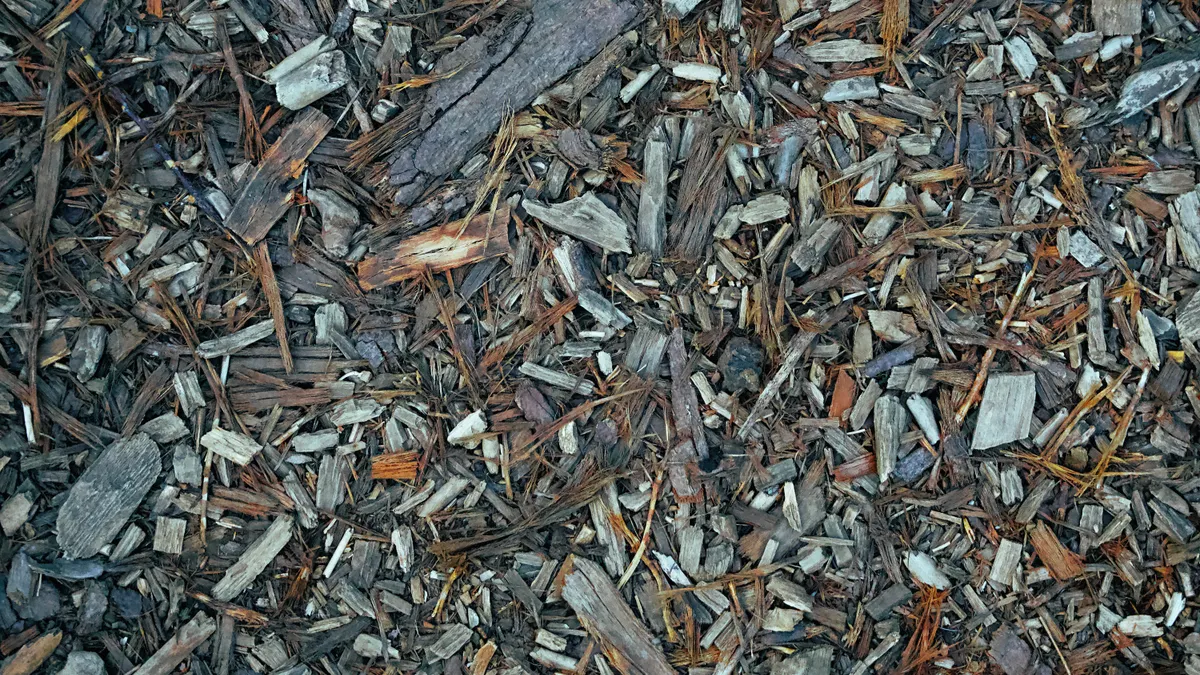
Wood chips can be a strong default for sunny beds because they slow drying better than many fine materials and they last longer on exposed ground. The larger pieces create air space that shades the soil and reduces direct sun on the surface. That matters in front yards, west-facing borders, and open planting strips where heat builds all afternoon.
This is the right pick for shrubs, young trees, mixed perennials, and dry-border plantings that need the bed to stay cooler between waterings. Wood chips also tend to move less in wind than shredded material, which is a quiet advantage in open sites. In a bed that gets six or more hours of direct sun, that stability matters as much as appearance.
The downside is that wood chips look rougher and can feel too coarse for formal garden beds. They also need a little more forgiveness from the designer: the bed should not look like a clipped boxwood parterre if the surface is chipped and irregular. They are not the best answer where a very refined finish is the priority, and they are not the best fit for areas that are frequently raked or replanted with annuals.
For a sunny bed, I would usually choose wood chips before I choose a fine decorative bark. The larger particle size gives you a better chance of keeping soil moisture from disappearing too quickly.
What shredded mulch does better and where it falls short
Shredded mulch is the compromise option: it knits together well, covers uneven ground fast, and gives a finished look without the bulk of chips. It can work in both shade and sun, but it is best where you need coverage on a slope, around mixed plantings, or in beds that get moderate sun rather than full blast.
Its strength is coverage. Because the pieces interlock, shredded mulch stays put better than loose, chunky material on a slight incline. That can help in beds where rain would otherwise wash lighter cover downslope. It also makes a bed look filled in quickly, which matters when the planting is still young and the bare soil is showing.
Its weakness is heat behavior. In strong sun, shredded mulch can break down faster and lose its structure sooner than wood chips. In heavy shade, it can hold too much moisture if laid too thick. That combination makes it useful, but not the first pick for a bed with a clearly dry or clearly wet personality.
I would skip shredded mulch in two places: a very dry full-sun bed that needs the longest possible protection, and a boggy shade bed where the surface already stays damp. It is the middle-of-the-road answer, and that is its value and its limitation.
The honest side-by-side
The comparison is less about style than about how the surface behaves after rain and sun. For a gardener trying to match material to conditions, these differences matter more than color or bag size.
| Criteria | Bark mulch / pine bark | Wood chips / shredded mulch | Winner for [condition] |
|---|---|---|---|
| Moisture retention | Good in shade; can stay damp longer | Good in sun; chips slow evaporation well | Bark for shady beds, chips for sunny beds |
| Heat reduction at the soil surface | Moderate | Strong with larger chips | Wood chips for hot, exposed beds |
| Appearance in formal beds | Neater, more finished | Rougher, more natural | Bark for visible front-yard beds |
| Stays put on slopes | Fair | Shredded mulch is better here | Shredded mulch on slight grades |
| Best for dry soil | Helpful, but not the strongest shield | Best when the goal is to slow water loss | Wood chips for dry spots |
| Best for deep shade | Strong match | Can be too bulky or coarse | Bark mulch in shade |
| Breakdown speed | Usually moderate | Often slower, especially larger chips | Wood chips for lower-maintenance beds |
| Risk in wet clay | Higher if laid too thick | Lower when spread correctly | Wood chips where drainage is tight |
The table points to a simple rule: bark and pine bark are the cleaner fit for shade, while wood chips are often the stronger fit for heat and dryness. Shredded mulch is the practical middle ground when the bed is neither clearly wet nor clearly dry.
Bark mulch: who should actually use it, and who should not
Bark mulch is the right pick for gardeners who want a tidy finish in shaded or partly shaded beds and who are trying to hold soil moisture without making the bed look coarse. It works well around shrubs, ferns, hostas, and foundation plantings where the bed already has some organic matter and does not dry out aggressively.
The strength of bark is consistency. Pine bark especially gives a lighter, cleaner look and tends to blend well in beds where the plant palette is restrained. It also breaks down at a pace that suits ornamental beds, so you are not constantly refreshing it.
The weakness is that bark is not the hardest-working choice in full sun. In exposed beds, especially where the soil is already dry, a fine bark layer can dry out faster than you want and lose its protective value sooner. It can also mat down if the pieces are very fine or if watering is frequent and shallow.
Skip bark if the bed faces hot afternoon sun, the soil drains fast, and you need the mulch to work hard rather than just look polished. In those conditions, bark is more decorative than functional.
Wood chips and shredded mulch: the specific situations where they win
Wood chips win in sunny beds and dry spots because they are the better shield against water loss. A coarse chip layer shades the soil, slows evaporation, and lasts longer under heat. That is exactly what a dry border, a west-facing planting strip, or a new shrub bed usually needs.
Shredded mulch wins when the bed has shape problems rather than temperature problems. If the soil surface slopes, or if the area is prone to washout after rain, shredded material holds together better than loose chips. It is also useful where you want a fast visual fill between plants and do not want obvious gaps.
The limitation of wood chips is appearance. They are practical, not polished. The limitation of shredded mulch is durability in extreme heat; it can thin out faster and may need topping up sooner than chips. Both are weaker choices in very wet shade if laid too deeply.
For a dry spot, I would pick wood chips first. For a sloped border or a bed that needs the covering to knit together, I would pick shredded mulch second.
When to reconsider the choice entirely
There are a few cases where the answer flips, and ignoring them leads to the wrong product.
Since shady beds can also be waterlogged after rain, neither bark nor shredded mulch is the first thing to fix in that situation. Drainage and grading come before the cover. A moisture-holding top layer will only hide the real issue for a while.
Second, if the bed is sunny but irrigated deeply and regularly, you may not need the heaviest-duty cover. A cleaner bark layer can be enough if soil moisture is already under control and the bed is more ornamental than drought-prone.
Third, if the site is a path edge, a wind tunnel, or a slope that sheds material every storm, stability matters more than appearance. Shredded mulch may outperform bark there because it locks together better.
Fourth, if the bed is extremely dry and the soil is bare and compacted, mulch alone will not solve it. A 2- to 3-inch layer helps, but the bed may also need compost, deeper watering, or a soil-breakup plan. Mulch is a cover, not a cure; if the problem is persistent or severe, consult a local extension office or landscape professional and use the guidance alongside source-based advice from Cornell Cooperative Extension or your state extension service.
The broader hub on mulch types and uses belongs here in the decision process because this choice is never just about one bed. It is about matching material to the job the bed is actually asking for.
The verdict: which one to choose and why
Choose bark mulch or pine bark if the bed is shady, tidy, and already holds moisture fairly well. Choose wood chips if the bed gets strong sun, dries fast, or needs strong protection against evaporation. Neither if the site puddles, the soil is badly compacted, or the real problem is drainage rather than surface cover.
That is the clean call. Shade points to bark; sun and dry soil point to wood chips; shredded mulch is the fallback when the bed needs help staying in place more than anything else.
What mulch works best in full sun?
Wood chips work best in full sun. Their larger pieces shade the soil well and slow evaporation better than finer, more decorative materials. If the bed is exposed for most of the day, chips are the strongest choice when the goal is to protect soil moisture and reduce heat at the surface. A 2- to 3-inch layer is the usual range.
What mulch helps shade beds hold moisture?
Bark mulch, especially pine bark, helps shade beds hold moisture without making them look heavy. The pieces settle neatly and support cool, even conditions around roots. That said, if the shade bed stays wet after rain or sits in clay, a thinner application is safer than piling it deep.
Does mulch choice matter in dry soil?
Yes, mulch choice matters more in dry soil than almost anywhere else. Dry spots need the cover that slows water loss the longest, which usually means wood chips over finer bark. A dry bed also needs the mulch depth checked carefully; too little does not protect, and too much can block water from reaching the root zone.
Drafted with AI; not yet reviewed by a person.
Leave a Reply