
Last updated: November 06, 2026
In short: if the bed still has loose, recognizable mulch and enough depth to protect the soil surface, top it off; if it has turned thin, matted, or mostly into compost, reset it.
This guide shows the checks that settle the question in How to Tell if Existing Mulch Needs Only a Top-Off or a Full Reset, then turns those checks into a simple rake-and-trowel decision you can trust.
Start with the bed you actually have, not the color you see
Start with the bed itself, because the color alone does not tell you whether it needs a light refresh or a full reset.
Picture this: you’re standing by a garden bed with old mulch, and it looks dull, flat, and a little patchy. The color may be faded, but that alone does not tell you whether the bed needs a light refresh or a full reset.
The real test is condition, depth, and structure. A bed can look tired and still be fine for a top-off if the lower layer is loose and there’s still useful depth over the soil surface.
- Look for loose pieces you can separate with a rake.
- Check whether the bed still has visible fibers, chips, or bark chunks.
- Ignore color by itself; sun fades mulch long before it fails.
A good working rule is simple: if the mulch still behaves like mulch, it can often be topped off. If it behaves like soil, compost, or a crust, that points toward reset territory.
How do I know if existing mulch only needs a top-off?
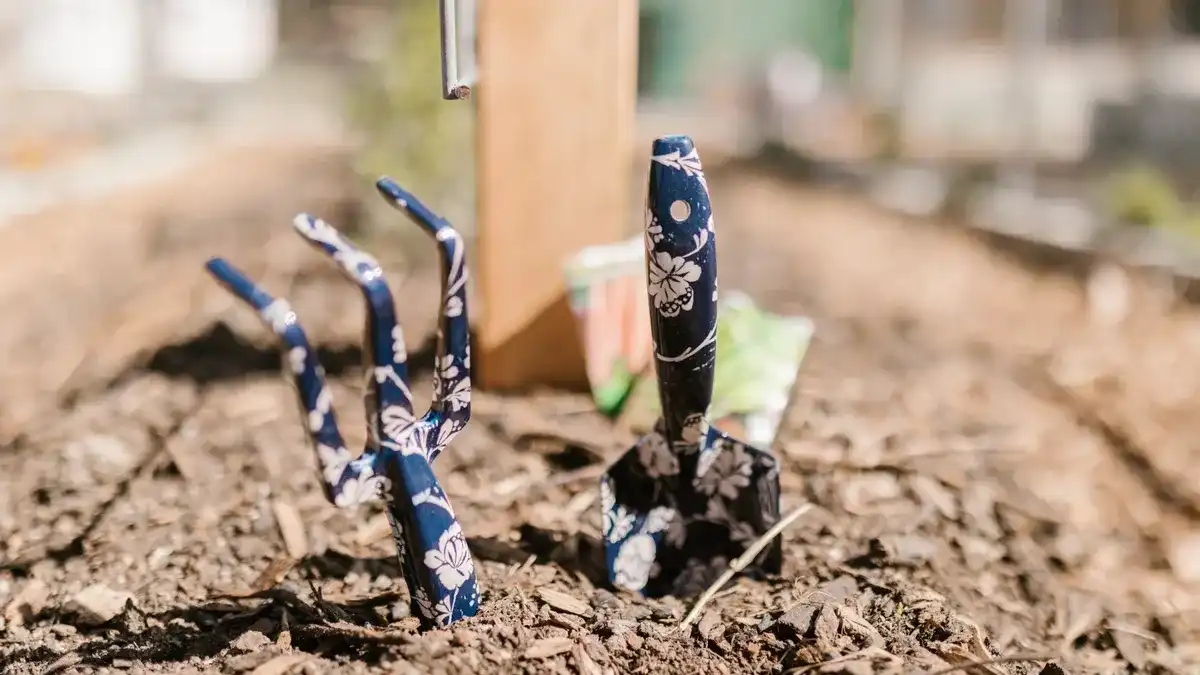
Existing mulch only needs a top-off when the layer is still loose, has air space, and covers the soil surface.
Picture this: you slip a trowel into the bed and find a layer that still has spring, air spaces, and enough material to cover the soil surface. That’s the sign you’re usually in top-off territory, not full replacement.
The check is depth remaining and compaction. A bed that still has a workable layer after a light rake is usually a candidate for more mulch on top, not a teardown.
Use this quick decision list:
- Rake the surface lightly in 2 or 3 spots. If the bed loosens without resistance, the lower layer is still alive enough to keep.
- Trowel into one area about a hand’s depth. If you can still see distinct pieces instead of dark sludge, that’s a good sign.
- Measure the visible layer. If you still have meaningful coverage over the soil surface, a top-off usually makes sense.
- Press the mulch with your hand. If it compresses a little but does not seal into a hard crust, it may only need a refresh.
The catch is that a top-off works best when the bed is still doing its job. If the layer is thin but not broken down, adding material can restore coverage without starting over.
- Good sign: loose texture, intact chips, or bark pieces.
- Good sign: soil is covered, but you can still see the old layer.
- Bad sign: the bed turns into a mat that holds water on top.
What tells me the mulch needs a full reset?
Mulch needs a full reset when it has broken down enough that it no longer gives structure, air flow, or clear coverage.
Picture this: you rake one corner and the layer comes up as a stuck-together mat, or your trowel hits a dark, crumbly layer that looks more like finished compost than mulch. That is the point where a full reset usually makes more sense.
The giveaway is decomposition stage. Once old mulch has broken down so far that it no longer gives structure, air flow, or clear coverage, topping it off just hides the problem.
Look for these reset signs:
- The surface is matted and water sits on top after rain.
- The lower layer has turned into fine dark material with little texture left.
- Weeds root through the bed because the mulch no longer forms a barrier.
- You can see almost no original chips, bark, or strands when you dig down a few inches.
- The bed is so thin that the soil surface is exposed in more than a few spots.
A reset is not about color. Old mulch can fade and still be useful. What matters is whether it still forms a layer. If it no longer acts like a layer, adding more on top only buries a failing base.
Use the rake-and-trowel test in 3 spots before you decide
Use the rake-and-trowel test in 3 spots before you decide, because one area of the bed can age differently from another.
Picture this: you’re looking at one bed edge that gets full sun, another under a shrub, and a third where runoff from a downspout hits. Those spots often age at different speeds, so one quick glance can fool you.
The best check is a simple 3-spot test with a rake and trowel. You do not need a complicated tool set or a big cleanup before you decide.
- Rake one sunny spot, one shaded spot, and one low spot.
- Trowel down 2 to 3 inches in each place.
- Compare what comes up: loose pieces, fine compost, or a hard mat.
- Judge the bed by the worst area, not the best one, if the whole bed is meant to work as one surface.
Use the same standard in each spot. If the bed still has structure across all 3 checks, top-off is likely enough. If one or more spots have turned to mush or crust, the bed is telling you it has crossed into reset territory.
The truth is, uneven beds can cause bad calls. A shaded side can hold together while the sunny side is already spent.
- If all 3 spots still show recognizable mulch, a top-off is reasonable.
- If 2 or 3 spots look compost-like, a reset is the cleaner choice.
- If only the edges are thin, the bed may need patching, not a full rebuild.
What depth and structure count as a top-off threshold?
A top-off threshold starts when the old layer is still thin, loose, and identifiable.
Picture this: you pull back a small section and can still see the soil covered by a layer that is thin but not gone. That is often the threshold where more material helps without forcing a full reset.
The useful standard is remaining coverage, not a perfect number. If the existing layer still covers the soil surface and has enough structure to hold new material, top-off is usually the lower-effort fix.
This is where many people make a mistake: they judge by appearance alone and add fresh mulch over a layer that is already too deep or too broken down. That creates a heavy bed with weak airflow and no real improvement underneath.
A better rule:
- Top off when the old layer is thin, loose, and still identifiable.
- Reset when the old layer is thick enough to hide problems or so broken down it acts like soil.
- Recheck after a rake if the bed changes shape a lot. A 1-inch surface can hide a deeper mat.
If you want a simple field test, slide the trowel in and notice resistance. A bed that still has a clear layered feel is different from one that feels uniform all the way through.
Common mistakes that lead to the wrong call
Common mistakes lead to the wrong call when color, not structure, drives the decision.
Picture this: you see faded mulch, assume it is dead, and either rip out too much or pile on more than the bed can handle. The result is wasted effort and a bed that still looks off.
The biggest mistake is using color as the main signal. Sun and weather bleach mulch long before the material fails, so a gray surface does not automatically mean replacement is needed.
Another mistake is ignoring compaction. A bed can still look full while the lower layer has sealed into a mat. In that case, top-off only covers a problem that should be reset.
Here’s what those mistakes cost:
- Too much top-off can bury the bed and make the soil surface stay wet.
- A pointless full reset can turn a simple refresh into a half-day job.
- Guessing from the top layer alone can leave you with weeds, poor drainage, or a bed that keeps sinking.
The fix is plain: check the lower layer with a rake and trowel, not just your eyes. If the bed still has a living structure, refresh it. If it does not, start over.
A practical decision path you can follow in 5 minutes
A practical decision path takes about 5 minutes, and it tells you whether the bed needs a touch-up or a rebuild.
Picture this: you want a quick answer before you buy more material or spend the afternoon on the bed. A short check gives you that answer without turning the job into guesswork.
Use this 5-minute sequence and decide based on what you find:
- Rake the surface in 2 or 3 places.
- Trowel down and inspect the lower layer.
- Feel for loose texture versus a dense mat.
- Look for remaining chips, bark, or fibers.
- Decide: top-off if the layer is still recognizable; reset if it has mostly decomposed.
This works because it separates surface looks from actual bed condition. You are not asking, “Is it old?” You are asking, “Does it still function as mulch?”
The best part? You only need basic tools and a few minutes. No special gauge, no guesswork, and no need to clear the whole bed just to get the answer.
Where this fits with the rest of mulch timing and maintenance
This decision fits into wider mulch timing and maintenance, so you can inspect before you add and avoid redoing the bed later.
Picture this: you know the bed’s condition now, but you still want the bigger maintenance picture so you do not overdo it next time. That is where timing and upkeep planning matter.
This decision belongs inside a wider maintenance routine, not as a one-time panic check. A bed that stays loose, drains well, and still covers the soil surface is usually a top-off candidate when it starts thinning. A bed that keeps collapsing into a layer of fines is moving toward reset work and belongs in the timing and maintenance plan for the yard.
For the fuller schedule and yard-wide planning, the timing and maintenance hub covers the next step without repeating this condition check.
A good rule of thumb from field work is simple: inspect before you add, not after. That way the bed tells you whether the job is a touch-up or a rebuild.
Key Takeaways
A top-off works when the old layer still has shape, air, and usable coverage.
- A top-off works when the old layer still has shape, air, and usable coverage.
- A full reset makes sense when the bed has become a mat, sludge, or fine compost.
- Color alone is a poor guide; texture and depth matter more.
- A rake and trowel at 3 spots will tell you more than a glance at the surface.
- Judge the bed by how it behaves, not by how faded it looks.
When should you top off mulch?
Top off mulch when the bed still has recognizable material and the layer is thin but functional. The surface should loosen with a rake, and the lower layer should still look like mulch, not compost. If the bed still covers the soil surface well enough to do its job, a refresh is usually enough.
When do you replace mulch completely?
Replace mulch completely when the bed has turned into a matted, compacted, or mostly decomposed layer. If a trowel shows dark fines, little texture, or poor structure throughout the bed, a reset is the cleaner choice. A full replacement also makes sense when the mulch no longer drains or holds a distinct layer.
How do you know mulch is too decomposed to refresh?
Mulch is too decomposed to refresh when it no longer looks or acts like mulch. If the bed is mostly soft, dark, and soil-like with few visible chips or fibers, topping it off only hides the problem. A rake and trowel check in 2 or 3 spots will show whether there is enough structure left to keep.
Drafted with AI; not yet reviewed by a person.
Leave a Reply