Last updated: November 02, 2026
Quick Answer: Bulk mulch pickup fits bigger jobs, bagged store pickup fits small jobs, and local delivery fits situations where hauling is the bottleneck. In this guide to How to Compare Bulk Mulch Pickup, Bagged Store Pickup, and Local Delivery, I break down timing, loading effort, vehicle capacity, and the kind of project each purchase method serves best.
Key Takeaways
- Bagged store pickup is the simplest option when you want a countable amount that fits most vehicles.
- Local delivery helps most when hauling is the hard part and you want to skip the return trip.
- The decision is about time, lifting, and cargo space, not just price.
- Start with the vehicle, then the job size, then the time you have.
Our Top 3 Picks at a Glance
- #1 Best Overall: Local delivery — strongest when you want the load dropped where the job starts and do not want to handle a yard’s worth of bags or loose material.
- #2 Best Budget Pick: Bagged store pickup — best when you need a small, exact amount and can load it yourself in one trip.
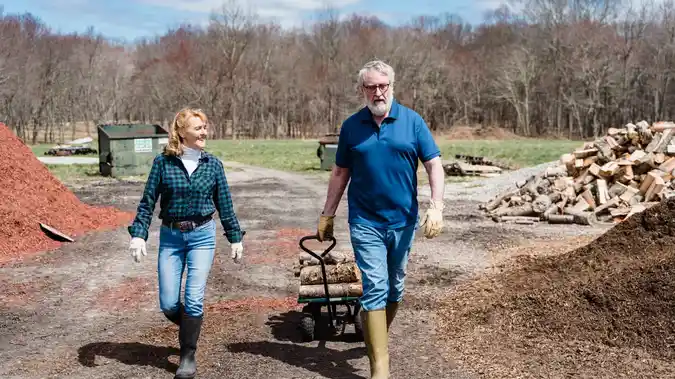
- #3 Best Heavy-Duty / Upgrade Pick: Bulk mulch pickup — best when you have a truck, trailer, or dump bed and want to move a larger volume without paying for lots of bags.
| Product / Option | Best For | Core Spec | Standout Feature | Action |
|---|---|---|---|---|
| Local delivery | Large yards, limited hauling space, or anyone who wants the material dropped close to the work area | Usually sold by volume or load size | Saves loading time and avoids multiple trips | Check delivery zone and current fee with the seller |
| Bulk mulch pickup | Truck or trailer owners handling a bigger project | Loose material by cubic yard or similar yard-yard measure | Less packaging waste than bags | Confirm yard loading rules before you go |
| Bagged store pickup | Small beds, patch jobs, and tight spaces | Prepacked bags, often easy to count and stack | Simple to grab the exact number of bags you want | Use when your vehicle can carry only a few bags |
The guide to mulch purchasing and delivery is really a guide to moving material without creating a second job for yourself. Here’s the catch: the “best” option changes as soon as your vehicle size, job size, and unloading help change.
Bulk mulch pickup: the best fit for bigger loads and the right vehicle
Open truck bed? Trailer? Dump bed? If you’ve got one of those and need enough material to cover beds without counting bags, bulk pickup is usually the cleanest fit. It cuts packaging, and for larger areas it often beats a stack of 2-cubic-foot bags on pure practicality.
At the yard and back home, though, the burden shifts to you. You still have to load it, tie it down, and unload it; if the seller uses a machine, that helps, but I’d still check the vehicle’s weight limit and the yard’s loading rules before counting on it. Bulk pickup is strongest for bigger jobs and weaker for people who want a clean, quick handoff.
- Good for:
- Owners of pickup trucks or trailers
- Larger garden beds
- People who want fewer pieces to move
- Not so good for:
- Small cars
- Solo shoppers without help at home
- Anyone who hates sweeping out a vehicle after transport
What makes this format stand out is the simple math of handling. Fewer containers means fewer lifts. Fewer lifts means less time spent ferrying material from curb to bed. That math stops working fast if the “savings” turn into two hours of loading, strapping down, and cleanup.
Bagged store pickup: the cleanest choice for small projects
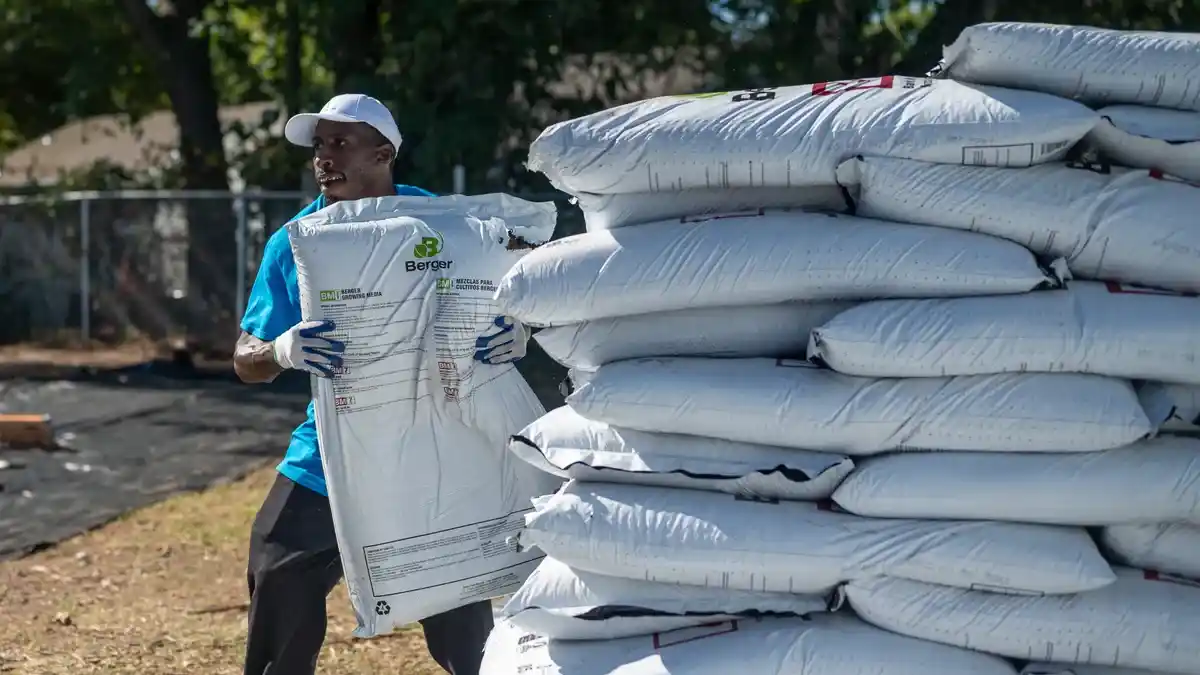
Maybe you only need enough material for a front bed, a narrow border, or a few problem spots, and you’re already stopping on the way home. Bagged store pickup is the easiest path because it gives you a known amount in a form you can count, stack, and fit into almost any vehicle.
Control is the real advantage. Buy a few bags, stop when the job is covered, and keep leftovers out of the driveway. Bagged pickup wins for small projects because the material is already portioned. It also works well when you need to match an exact area and don’t want to overbuy just to meet a yard-yard minimum.
But there’s a trade-off: bags mean more handling, more plastic, and more trips to move the same amount of material. A small crossover can carry several bags; a sedan may carry only a few before passenger space disappears. Once the project grows past a small refresh, bagged pickup becomes a lot of lifting for not much gain.
- Good for:
- Small yards or patch jobs
- Cars and small SUVs
- People who want neat, counted units
- Not so good for:
- Big installations
- Buyers who need a lot of product fast
- Anyone trying to avoid repeated lifting
If you’re comparing this with bulk pickup, think in terms of inconvenience. Bagged pickup costs you less planning, but more handling per unit. That’s a fair trade for a small project. It’s a bad trade for a full-bed refresh.
Local delivery: the strongest choice when hauling is the problem
The pile still has to end up in the yard, but maybe your vehicle won’t carry much — or maybe you’d rather spend your energy spreading than driving back and forth. Local delivery wins when transport is the hard part, because it removes the loading step from your day and cuts out the return trip.
Delivery is especially useful if the seller can place the material near the work zone. That can save a long wheelbarrow run from the curb to the back fence. Delivery is often the easiest option for large jobs with poor hauling capacity. It’s also a strong match when you want one transaction instead of a half-day of driving and loading.
The downside is control. You have to work around the seller’s delivery window, access rules, and drop-off limits. If the truck can’t get close to the bed, the convenience drops fast. And if you need the material today, waiting for a slot can feel like watching paint dry.
- Good for:
- Large projects
- Homes without a truck or trailer
- Buyers who want less physical handling
- Not so good for:
- Tight access sites
- Same-day urgency without a confirmed window
- People who need only a tiny amount
Honestly, delivery is often the most comfortable choice, but comfort depends on site access. A dropped load 30 feet from the planting bed is useful. A dropped load that blocks the driveway is not. According to the U.S. Consumer Product Safety Commission, avoiding unsafe load handling matters as much as convenience. See the CPSC guidance on hauling and load security at https://www.cpsc.gov/ and OSHA’s material-handling overview at https://www.osha.gov/materials-handling.
The honest side-by-side: where each option really wins
You may already know the project size and still want a clean comparison of the three paths. The real decision isn’t just “cheap or expensive.” It’s how much time, lifting, and vehicle room the purchase asks from you.
Bulk pickup wins for volume, bagged pickup wins for precision, and delivery wins for convenience. That split holds up across most typical yard jobs.
| Criteria | Bulk mulch pickup | Bagged store pickup | Winner for [condition] |
|---|---|---|---|
| Vehicle capacity | Needs room for loose material and a secure load | Fits in a car, SUV, or small truck in small amounts | Bagged store pickup for limited cargo space |
| Loading effort | Higher at the yard and at home | Lower per bag, but more total lifts | Bagged store pickup for quick hand loading |
| Unloading effort | Often one larger unload | Many smaller carries | Bulk mulch pickup for fewer lifts |
| Project size | Better for larger beds and wider coverage | Better for small beds and touch-ups | Bulk mulch pickup for bigger areas |
| Transport cleanup | More mess risk in the bed or trailer | Cleaner packaging, less loose debris | Bagged store pickup for cleaner transport |
| Timing flexibility | Usually tied to yard hours | Usually easy to grab during regular store hours | Bagged store pickup for last-minute runs |
| Delivery dependence | None if you haul it yourself | None if you haul it yourself | Tie for self-haul options |
| Site access needs | Requires a vehicle that can take loose load | Needs only enough cargo room for bags | Bagged store pickup for tight parking |
| Drop-off convenience | Not part of the plan | Not part of the plan | Delivery for doorstep placement |
Two things often get missed in generic advice. First, the “cheapest” option on paper can be the most tiring in practice. Second, the fastest option depends on your local seller’s setup, not just the label on the purchase method. For a yard that loads on-site, bulk pickup can move quickly. For a store with bags staged near the lot exit, pickup can be faster than expected. For a supplier with a tight delivery calendar, the “quickest” option may be whatever is already in stock.
How to choose based on your project size and vehicle
Because the vehicle matters first, the answer gets easier once you match the purchase to what you can actually carry. Start with the vehicle, then the job size, then the time you have. That order saves more headaches than chasing the lowest listed option.
Choose bagged store pickup for small jobs, bulk pickup for medium-to-large jobs with hauling gear, and delivery when hauling is the bottleneck. That’s the cleanest rule for most homeowners.
- Pick bagged store pickup if:
- You only need a little material
- You drive a car or small SUV
- You want easy counting and no special unloading plan
- Pick bulk mulch pickup if:
- You have a truck or trailer
- You’re covering a lot of ground
- You’re fine doing the loading and cleanup
- Pick local delivery if:
- Your vehicle can’t carry the load
- You want the material placed near the job
- You’d rather pay to save time and back strain
A landscape supply yard often makes bulk pickup practical because that’s where loose material is set up for larger loads. A store lot usually makes bagged pickup easier because the inventory is already packaged and ready to stack. Delivery sits between them as the no-haul option. For more buying guidance, see my mulch buying guide, mulch delivery options, and yard material calculator.
One hard line: if you need only a few bags, don’t force a bulk order just to sound efficient. The leftover pile can become clutter, and the loading effort can outweigh any savings. Small project. Small purchase.
Where the verdict flips: exception scenarios that change the answer
A project can change the answer faster than the product label does. These are the cases where I’d reverse the normal recommendation.
The verdict flips when access, timing, or handling changes more than the job size does.
-
Your driveway is tight and the drop zone is awkward.
Delivery can stop being convenient if the truck can’t place the load where you need it. In that case, bagged pickup may be easier even for a bigger-than-usual project. -
You have a truck, but no help to unload at home.
Bulk pickup starts looking less attractive when the unload becomes a solo hauling job. Bagged pickup can be easier to manage one bag at a time. -
You need the material today and the yard is out of your way.
If delivery windows don’t fit and the landscape supply yard is across town, store pickup can be the fastest practical option. -
You’re buying for a small front bed, not the whole yard.
Even with a truck available, bulk can be overkill. Bagged pickup keeps the purchase matched to the job.
That’s why the “best” option can change in a single afternoon. Once you see the access problem, the answer usually changes fast. For a practical reference, the National Institute for Occupational Safety and Health recommends planning material handling to reduce strain and awkward carries at https://www.cdc.gov/niosh/.
The verdict: which one to choose and why
Choose bulk mulch pickup if you have a truck or trailer, want to move a larger load, and can handle loading and cleanup yourself. Choose local delivery if hauling is the real obstacle and you want the load placed close to the work area. Neither if you only need a few bags and have no good place to unload them.
That call holds for most readers because the decision is really about friction. Bulk pickup removes packaging but adds labor. Bagged pickup adds packaging but reduces transport stress. Delivery removes hauling altogether but asks you to work around a schedule and site access.
The quickest way to compare your options before you buy
Because the choice comes down to a few practical limits, you can narrow it quickly before ordering. Ask three questions: how much material do I need, what can my vehicle carry, and where do I want the load dropped?
If you answer those honestly, the choice gets plain fast. A landscape supply yard is usually the right stop for bulk pickup. A store lot is the natural fit for bagged pickup. Delivery makes sense when time and handling matter more than getting the material yourself. For a broader look at buying paths, link back to the mulch purchasing and delivery hub and use this page as the comparison that settles the logistics.
Drafted with AI; not yet reviewed by a person.
Leave a Reply