Last updated: November 01, 2026
Quick answer: use a protected path, smaller loads, and hard surfaces whenever possible. For How to Move a Bulk Mulch Pile Without Damaging Your Lawn, the main rule is simple: keep heavy loads off wet turf, spread weight across a wider surface, and use short trips so the lawn never takes a concentrated beating. If you can stage the pile on a driveway, that is usually the cleanest setup.
The safest way to move bulk mulch without tearing up turf
A safe approach is to stage the pile on the driveway, then carry or roll it to the beds in smaller loads. That keeps the heaviest traffic off the lawn and makes ruts less likely, especially after rain or on soft soil.
If the bulk mulch pile already landed on grass, treat the lawn like a temporary work zone and, if the turf is saturated or the yard is already thin, consult a lawn care professional before you keep moving it. Lay a tarp beside the pile, use a flat path across the driveway if you have one, and keep all travel in one line rather than crisscrossing the yard. A single lane of traffic beats a dozen random tracks every time. The University of Florida IFAS notes that repeated traffic and wet conditions increase turf damage, which is why one narrow lane is the better bet.
The goal is not speed at any cost. A 5-minute shortcut that leaves wheel marks, crushed crowns, and muddy tire prints can cost far more time in repair than the move itself. This method is not for saturated lawns, steep slopes, or yards that already have thin turf from drought or heavy use.
For broader delivery planning, this page sits inside the mulch purchasing and delivery logistics hub, which is the right place to think about where the load lands before it becomes a handling problem.
Prepare the route before you touch the pile
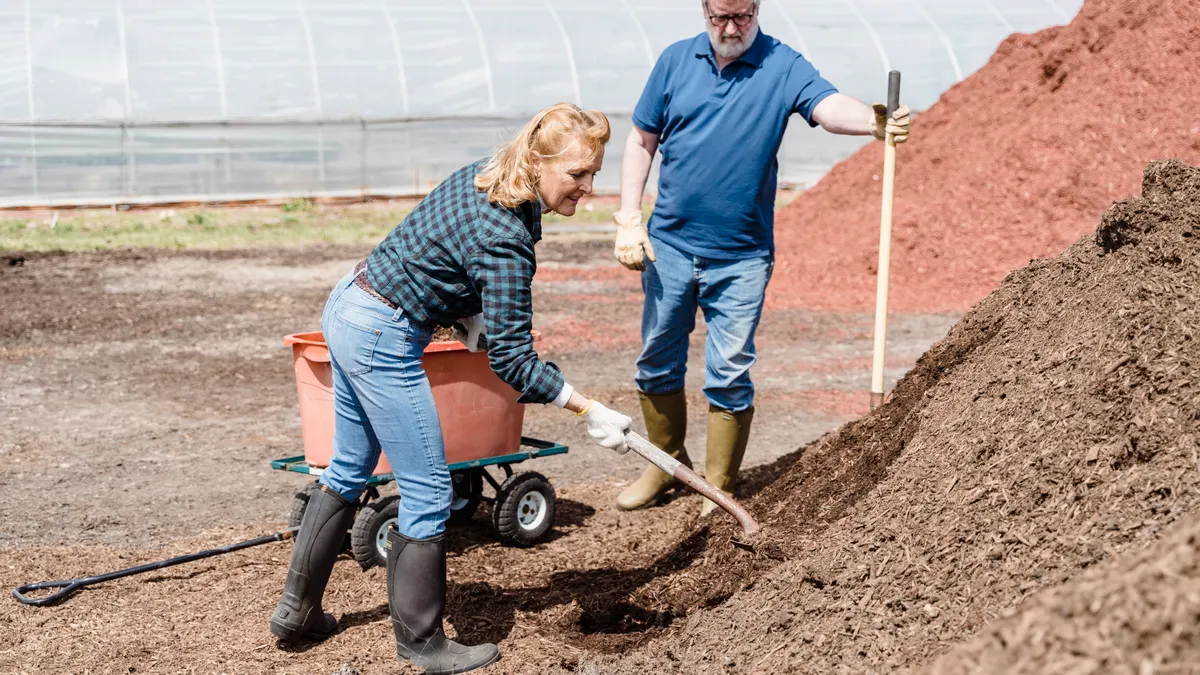
Prepare a 3- to 4-foot-wide route before the first shovel enters the pile. Clear sticks, toys, edging stakes, hoses, and low branches, then choose the hardest surface available: driveway, pavers, compacted gravel, or a board path. A 3- to 4-foot lane gives you room to roll without wandering onto turf.
A clean route reduces twisting, stopping, and sudden wheelbarrow corrections. Those little corrections are what scuff turf. If you need to cross grass, do it once, not repeatedly. Put down a tarp, a pair of 2-by-10 boards, or even plywood sheets on long crossings so the load rides on the temporary surface instead of sinking into the lawn.
Keep the route as straight as you can. A straight line puts less side load on the turf than a curved one, and it makes it easier to repeat the same path without widening the damage. If the ground is damp enough to leave a boot print deeper than a half inch, wait. A dry afternoon can save a weekend of lawn repair.
The wrong move is to improvise with the first trip and “fix it later.” Later often means compacted strips, torn blades, and wheel ruts that hold water after the next storm. The right move is to plan the travel lane before the pile becomes a project.
How do you move a big bulk mulch pile?
Move a big bulk mulch pile in small, repeatable loads using a wheelbarrow, tarp, or dolly, depending on how far the beds sit from the drop point. A full-size contractor wheelbarrow or a garden cart keeps the work controlled, while a tarp works better for short drags across a protected hard surface. The job goes faster when each trip has the same route and the same load size.
Here is the core procedure:
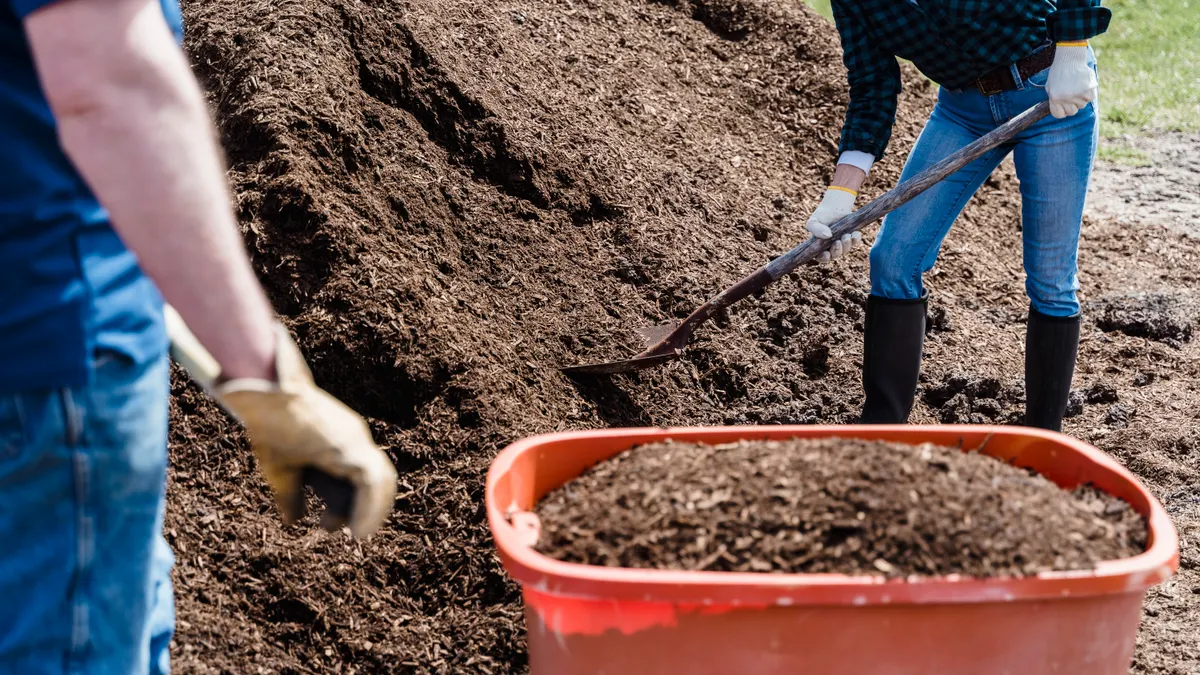
- Stage the tarp beside the pile on the driveway or another hard surface. The tarp catches loose material and gives you a clean place to load, which cuts spillage on the lawn.
- Fill the wheelbarrow to a manageable level, not heaped above the tray. A lower load is easier to balance and less likely to spill when you hit a small bump.
- Roll the wheelbarrow on the prepared route, keeping both hands on the handles and the load centered. That reduces sudden turns and the side-to-side wobble that scrapes turf.
- Dump the load as close to the bed as possible, ideally on another tarp or on the driveway edge. Short dumping distances mean fewer trips across the lawn.
- Return on the same path every time. Reusing one track protects the rest of the yard and keeps compaction in one narrow strip.
- Repeat with smaller loads until the pile is gone. Smaller loads may take more trips, but they lower the risk of rutting, tipping, and crushed grass.
A common mistake is overfilling the wheelbarrow. That saves no real time if the load slops out halfway to the bed. Another mistake is dragging the tray directly over grass. Even a short drag can shear the blades and leave a visible line.
If the pile sits awkwardly in the yard and a wheelbarrow would need to pivot on turf, switch to tarp dragging over a protected surface or use a dolly only on the driveway. A dolly is useful for dense bags or smaller containers, not for loose material unless the pile is already contained.
Use a wheelbarrow without leaving ruts
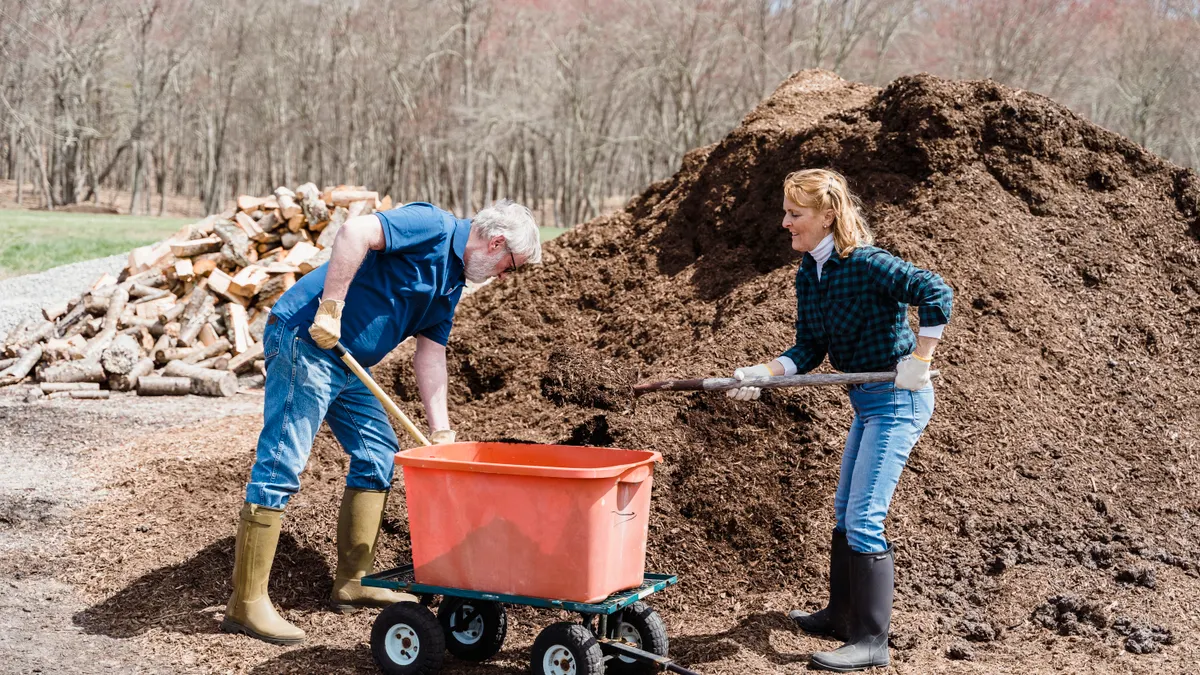
Use a wheelbarrow on firm ground and keep the tire pressure and load size consistent. A single-wheel barrow is easy to steer, but that same wheel can dig into soft soil if you turn sharply or stop with the tray full.
The best wheelbarrow path is usually the shortest one with the fewest turns. Start on the driveway or another hard surface, then transition to grass only if you must. If the lawn is soft, place down boards so the wheel rolls on a broader surface. A 2-by-10 board is a common improvised runway because it spreads weight better than a narrow tire track.
Keep the load low enough that you can see over it. If the tray blocks your view, you will miss sprinkler heads, edging stones, and soft patches. That is how people bend rims and scar turf in one move. Most residential wheelbarrows are easiest to handle when they are about two-thirds full; beyond that, balance gets sloppy fast.
This method works well for beds on the far side of the house, raised planters, and side yards with narrow access. It is less useful for long uphill carries or yards with weak turf, because repeated starts and stops do more damage than the moving itself. In those cases, cut the load size in half and accept the extra trips.
Use a tarp when the shortest route crosses the lawn
Use a tarp when you need to move material a short distance across grass and cannot avoid the lawn entirely. A heavy-duty tarp lets you drag a controlled load without scattering as much material as loose shoveling, as long as the path is short and the turf is dry enough to hold up. This is one of the best options when a driveway edge sits close to the beds.
Lay the tarp flat under the edge of the pile, scoop the material onto it, and keep the bundle low and compact. Drag the tarp by one corner or by two corners held at waist height if the load is light. Low, even pulls work better than jerking, because jerks twist the tarp and shear the grass beneath it.
The tarp method is not a good choice for long hauls or wet ground. Wet turf wrinkles, grabs, and tears more easily. If the lawn is soft after rain, put the tarp on the driveway, load there, and move only on hard surfaces. Dragging directly over sod can also leave fine debris packed into the blades, which makes cleanup slower.
This is the method I would choose for a narrow side yard, a short hop from driveway to bed, or a shallow bed edge that sits just off the pavement. It is the least elegant option, but it is often the gentlest on the lawn when used correctly. Just do not turn the tarp into a sled across the center of the yard; that trade-off saves a little lifting and costs much more turf.
What tools help most when the pile is awkwardly placed?
The main tools are a wheelbarrow, a tarp, a flat shovel, and a dolly for contained loads. Each one solves a different problem, and the wrong tool usually creates more lawn damage than the problem you were trying to avoid.
A wheelbarrow is best for distance. It keeps the load elevated and controlled, but it needs enough room to roll cleanly. A tarp is best for short transfers over a protected surface. It is quick, cheap, and easy to reposition, though it can snag if the load is too heavy or too wet. A flat shovel or scoop shovel helps with loading because it lets you move material in cleaner, flatter throws than a round-point shovel. A dolly helps with bags, bins, or buckets, not loose piles unless the mulch is first contained in a tub or tote. The EPA’s lawn care guidance also favors minimizing repeated soil stress, which fits this kind of staged handling.
If the pile was dropped on the lawn and you cannot get a wheelbarrow next to it without crossing turf, start by moving a few shovels onto a tarp at the nearest hard edge. That creates a transfer point. From there, you can wheel the rest. This small staging trick often matters more than the tool itself.
A lot of damage comes from trying to force one tool to do everything. A dolly on grass wobbles. A wheelbarrow over a soft side yard leaves tracks. A tarp on a long route can stretch and spill. Match the tool to the surface and the distance, and the lawn stays cleaner.
Keep the grass healthy after the pile is gone
Keep the grass healthy after the pile is gone by raking up debris, brushing blades upright, and watering only enough to settle disturbed areas. If the route was compacted, a light raking helps the turf breathe again and makes flattened blades stand back up faster.
Look for two kinds of damage: crushed grass and compacted soil. Crushed grass often recovers if you lift it with a leaf rake and leave it alone for a few days. Compacted soil is slower to recover because water and air move poorly through it. If the travel lane shows a shallow rut, top it with a light layer of soil and reseed only if the turf has actually broken. The University of Minnesota Extension notes that reseeding is most useful where turf has been torn out, not where it is only flattened.
Do not flood the area trying to “revive” it. Too much water can make the compacted strip softer, which invites more damage if you need to make another pass. A gentle soak is enough in most cases. If the path was crossed only once and the soil stayed firm, you may not need any repair at all.
The practical outcome is simple: the beds get mulched, the driveway does the heavy lifting, and the lawn looks like nothing happened. If you can see where you worked from 10 feet away, the route was too rough. Next time, shorten the path, reduce the load, and keep the traffic on hard ground.
Key Takeaways
- Put the pile near a hard surface whenever possible, because that does more to protect turf than any special tool.
- Use the same narrow path every trip so damage stays concentrated instead of spreading across the yard.
- Keep loads small enough to control easily; a lighter wheelbarrow is usually faster than a messy full one.
- Use a tarp for short, careful transfers and a wheelbarrow for distance.
- Avoid wet grass, sharp turns, and dragging heavy loads directly over the lawn.
How do you move a big mulch pile?
The easiest way is to move it in smaller loads on a wheelbarrow or tarp, using a driveway or other hard surface as the main route. That keeps the weight off the lawn and reduces rutting. If the pile is already on grass, stage a tarp beside it and create one narrow travel lane.
Can you push mulch across grass?
You can, but it is a bad idea on wet or soft turf. Pushing or dragging across grass can crush blades, leave tracks, and compact the soil beneath the surface. If you must cross the lawn, use boards or plywood for a short span and keep the movement to one pass.
What tools help move mulch faster?
A wheelbarrow, tarp, flat shovel, and dolly are the main tools that make the job faster without abusing the yard. The wheelbarrow handles distance, the tarp handles short drags, and the shovel helps load cleanly. A dolly helps with bins or bags, not loose pile material.
Drafted with AI; not yet reviewed by a person.
Leave a Reply