Last updated: November 01, 2026
Quick Answer: wood chips are the safest all-around pick for ordinary landscape beds, bark nuggets fit visible decorative beds, and fine mulch fits narrow borders and small plants. In this guide on How to Compare Wood Chips, Bark Nuggets, or Fine Mulch for Different Jobs, the main trade-off is simple: coverage, finish, or fit.
Key Takeaways
- Texture drives most results.
- Wood chips suit coverage-first jobs.
- Bark nuggets suit the cleanest finish.
- Fine mulch suits tight, precise spaces.
Wood chips usually work best for long-lasting ground cover, bark nuggets usually work best for a cleaner finished look, and fine mulch usually works best where you need tighter coverage and faster soil contact. The right choice depends on the job: landscape beds, garden borders, around trees, or along paths.
I write on landscape materials and site-use decisions, so I’m judging these by texture, stability, decay rate, and the finish they create, not by marketing language.
The fast answer: which texture fits which job?
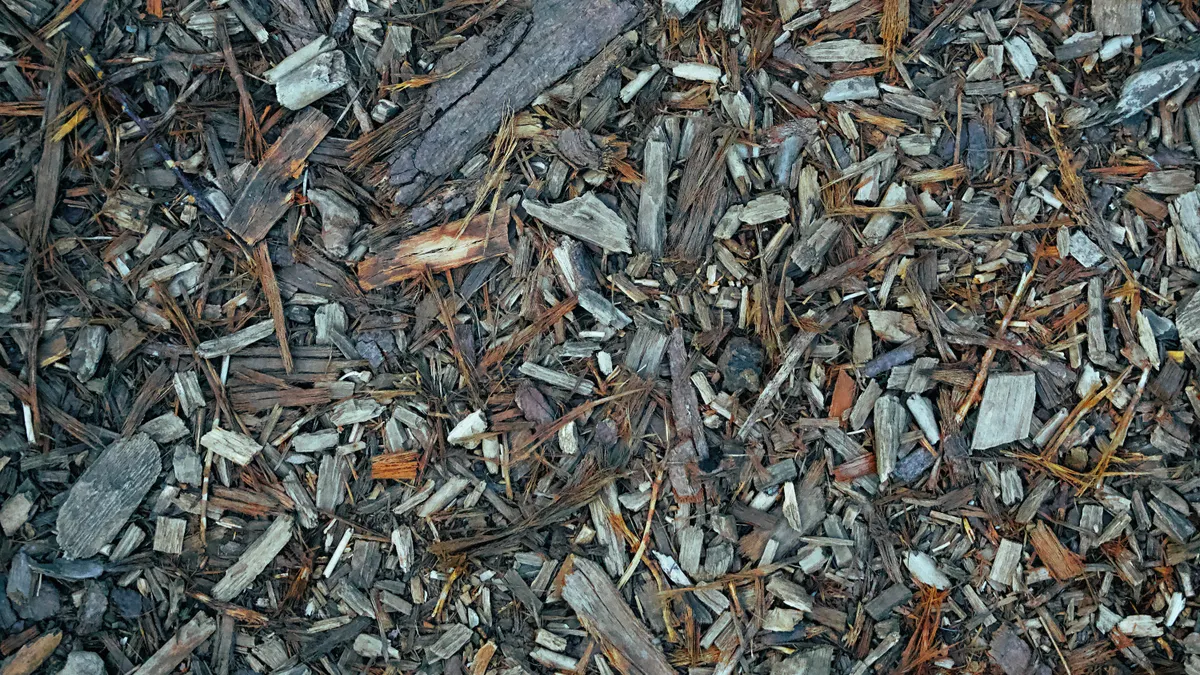
The texture decides most of the outcome. Wood chips are a strong all-purpose choice for loose, informal coverage; bark nuggets are a strong pick for decorative beds; fine mulch is the most practical when you want even coverage around smaller plants or a cleaner edge in garden borders.
That’s the short version, and it’s the one most readers need before they buy. Texture changes how the material behaves on the ground: larger pieces resist movement better, while smaller pieces knit together more tightly. That affects coverage, weed suppression, how often the surface needs topping up, and how polished it looks from the walkway.
Here is the comparison that matters most.
| Criteria | Wood chips | Bark nuggets | Winner for this condition |
|---|---|---|---|
| Texture | Mixed, irregular pieces with more structure than fine mulch | Coarse, chunky pieces that read as decorative | Wood chips for utility; bark nuggets for appearance |
| Coverage in tight spaces | Moderate; gaps can show in small pockets | Poorer in narrow gaps because the pieces are bulky | Wood chips |
| Stability in wind and runoff | Usually steadier than fine mulch | Steady if the pieces are large enough and the bed is flat | Wood chips on uneven ground |
| Decay rate | Typically slower than fine mulch because of larger particle size | Often slow on the surface, though stripped bark can break down unevenly | Wood chips |
| Visual finish | Natural, utilitarian, less formal | Cleaner, more landscaped, more uniform | Bark nuggets |
| Best fit for landscape beds | Good where the goal is coverage first | Good where the goal is a polished look first | Bark nuggets for curb appeal |
| Best fit for garden borders | Useful where border shape is irregular | Useful where border shape is broad and visible | Fine mulch for edging control |
| Maintenance burden | Moderate; can shift less than fine material | Lower in visible areas, but harder to distribute evenly in detail work | Wood chips for function; bark nuggets for display |
If the goal is one material for most ordinary landscape beds, I would choose wood chips over bark nuggets and fine mulch. They usually offer a useful balance of stability, longevity, and cost-conscious coverage, even though they do not deliver the polished finish of bark nuggets.
For broader context on mulch types and uses, the hub page can sit above this one; this article only handles the texture-level decision.
Wood chips: the practical choice for coverage and staying power
Wood chips win when the job is coverage first and appearance second. Their irregular particle size gives them more body than fine mulch, so they tend to stay where they are placed better than lightweight material, especially on sloped or uneven ground.
That matters in landscape beds where rainfall, foot traffic, and edging all compete with the surface. Larger fragments do not settle into a smooth carpet as quickly, but that is exactly why they hold shape longer. In many garden borders, that trade-off is useful: the bed stays defined, and the surface does not disappear into the soil as fast.
The strength of wood chips is also their weakness. They are less refined visually, so if the bed is meant to frame a front entry, a formal hedge, or a clean architectural facade, they can look coarse next to clipped plantings. They are also less good than fine mulch at sliding into narrow gaps around dense planting schemes. In small, decorative beds, that can leave obvious openings.
Use wood chips if you want:
- a more durable surface in landscape beds,
- a natural look that does not demand a polished finish,
- a material that behaves well in larger, informal plantings,
- less frequent topping up than finer material.
Skip wood chips if you need a close, tidy look in a front-yard border or around low ornamental plants where every gap shows.
For readers deciding between the three, wood chips are the most forgiving general-purpose option. They are not the most decorative, but they are the least fussy.
Pros
- Better structural feel than fine mulch
- Usually more stable on exposed ground
- Natural appearance that suits informal landscapes
- Good for larger beds and broader planting areas
Cons
- Less uniform than bark nuggets
- Can look rough in formal settings
- Not ideal where fine coverage is needed around small plants
- May leave visible gaps in narrow garden borders
Bark nuggets: the best-looking option, with real limits
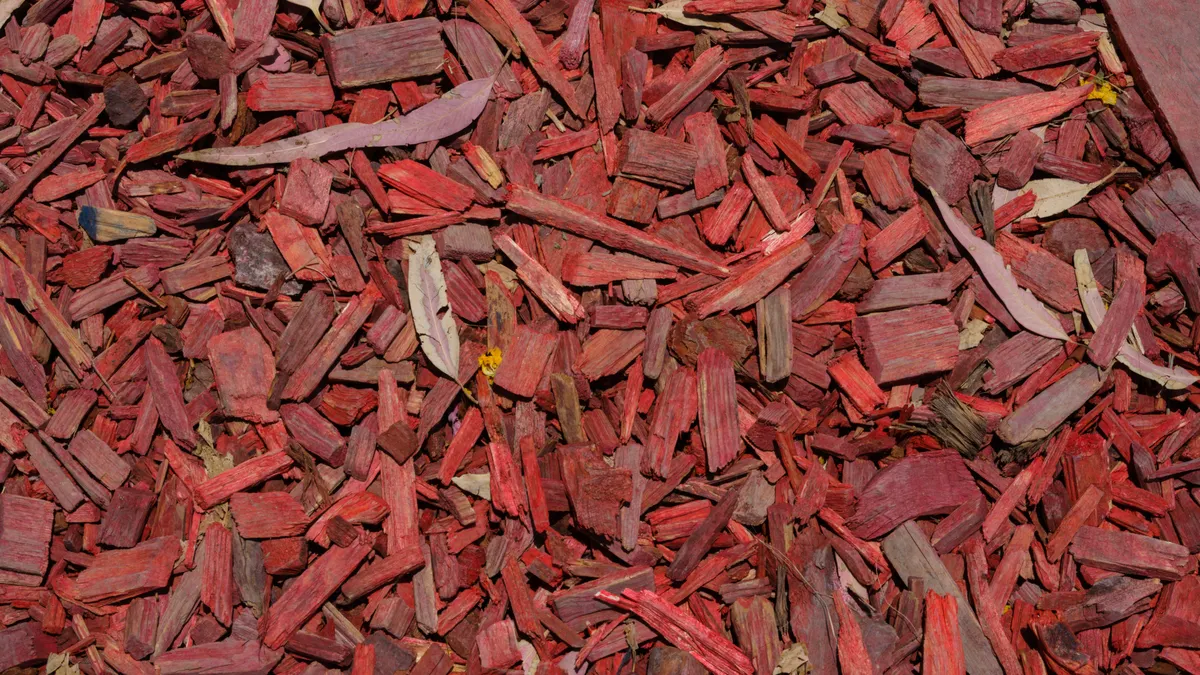
Bark nuggets win when the visual finish matters most. They are the clear choice for readers who want landscape beds to look trimmed, tidy, and intentional from the first glance.
Their big advantage is appearance. The larger, rounded pieces create a cleaner surface than wood chips, and the uniformity reads as more decorative from a distance. That makes bark nuggets a strong match for entry beds, showcase plantings, and visible garden borders where the surface itself is part of the design.
The drawback is function. Chunky bark pieces are not as good at filling small spaces, so they can leave more open ground around smaller plants. On irregular beds, they can look sparse unless the layer is carefully distributed. They also tend to be more of a visual material than a “workhorse” surface, which means they are less compelling when stability and coverage are the main goals.
Bark nuggets make sense if:
- the bed is highly visible,
- the planting design is formal or ornamental,
- the goal is a cleaner, finished look,
- you are working in landscape beds where visual order matters more than close packing.
They are not the first pick for tight garden borders filled with small plants, because the size of the pieces works against detail work. They are also the wrong answer for anyone who wants the most practical, lowest-fuss coverage.
Pros
- Strong visual finish
- Clean, decorative look in landscape beds
- Good for front-yard presentation
- Less “busy” visually than mixed wood chips
Cons
- Not as good in tight spaces
- Can look sparse around small plants
- Less useful where coverage and fit matter more than appearance
- Harder to place neatly in narrow borders
Fine mulch: the tidy fit for small spaces and cleaner edges
Fine mulch wins where fit matters more than durability. It is the best of the three for slipping into narrow spaces, wrapping around smaller plants, and creating a more even surface in garden borders.
That tighter fit is why fine mulch often looks so neat in planting areas with lots of detail. It covers soil more uniformly than larger material, and that gives the bed a smoother appearance right away. In a border that is meant to look finished at the edge of a walkway, that visual control is valuable.
The trade-off is stability. Because the particles are smaller, fine mulch can move more easily than chunkier options when wind, water, or slope come into play. It also tends to break down and blend into the soil faster than larger pieces, which means it may need attention sooner. That is not a flaw if the goal is a refined, close-in finish. It is a flaw if the goal is a set-it-and-forget-it surface in a broad bed.
Fine mulch is the right call if:
- you are working in compact garden borders,
- the plants are small or closely spaced,
- you want a smoother, more finished surface,
- the bed is protected enough that movement is not the main problem.
Skip it for wide, exposed landscape beds where the surface needs more structure. It is the least rugged option of the three, even though it often looks the most precise.
Pros
- Best fit around small plants
- Gives a smooth, even surface
- Helpful for neat garden borders
- Easier to shape into a tidy edge
Cons
- Moves more easily than larger textures
- Usually needs attention sooner
- Less durable on exposed or sloped ground
- Can look too delicate in large, rugged beds
Which one lasts longest, looks best, and stays put?
The answer depends on which job you care about most, but the ranking is not mysterious. For staying power, wood chips usually have the advantage because their larger pieces resist quick breakdown better than fine material. For visual finish, bark nuggets are the clear winner. For staying put, the edge goes to the larger-textured options, with wood chips often the safest general pick and fine mulch the least stable on exposed ground.
That is the real decision tree. A reader who wants a clean presentation in landscape beds should not choose the same material as a reader who wants practical coverage in garden borders. The wrong texture creates work later: thin spots, blown edges, or a bed that looks tired before the season is over.
A useful way to think about the three is this:
- Choose wood chips when function matters most.
- Choose bark nuggets when the bed itself is part of the display.
- Choose fine mulch when the planting is tight and the finish has to be precise.
For this page’s main comparison, wood chips are the best overall recommendation because they strike the broadest balance between coverage, stability, and longevity. They are not the prettiest, but they are the least likely to disappoint in ordinary landscape use.
The honest side-by-side for landscape beds and garden borders
Wood chips are the strongest default for landscape beds; bark nuggets are the strongest default for display beds; fine mulch is the strongest default for garden borders with tight plant spacing. That is the shortest honest summary.
The table below shows how the materials behave in the field, not just how they look in a bag.
Wood chips vs. bark nuggets vs. fine mulch at a glance
| Job factor | Wood chips | Bark nuggets | Fine mulch |
|---|---|---|---|
| Texture | Mixed and natural | Chunky and decorative | Smooth and compact |
| Coverage | Good over larger areas | Good in visible beds, less precise in tight spots | Good in close planting |
| Stability | Strong | Strong if the bed is calm | Weaker in wind and runoff |
| Decay rate | Slower than fine mulch | Variable, often slower-looking on the surface | Faster blend into soil |
| Visual finish | Informal | Most polished | Neat and tidy |
| Best use | General landscape beds | Front-yard presentation | Garden borders and small plants |
The comparison is not subtle once the job is defined. If the bed is broad and functional, wood chips usually make the most sense. If the bed is meant to be seen from the street, bark nuggets win on presentation. If the bed is tight and detailed, fine mulch is the better fit because it can move into spaces the larger materials leave open.
That said, a better-looking surface is not automatically a better material. A decorative bed that blows around or leaves gaps is still a poor bed. The visual finish has to survive weather and maintenance, or it is only a first impression.
When to reconsider this choice entirely
Choose something else if the bed is a high-traffic area, a steep slope, or a space where the surface will be disturbed often. In those cases, particle size alone is not the whole story, and any loose surface material can become a maintenance problem.
A few exception scenarios change the verdict:
- If the bed sits on a slope that sheds water, even bark nuggets can migrate, and a more anchored approach may be needed.
- If the planting is very dense and low to the ground, fine mulch may still be the best fit even though it is less durable.
- If the space is meant to look formal from day one, bark nuggets can beat wood chips despite the trade-off in fine coverage.
- If the bed is huge and purely functional, wood chips remain the clearest choice because they give the most practical balance.
For readers who want a decision instead of a debate, the rule is simple: the more visible and formal the space, the more bark nuggets make sense; the more functional and uneven the space, the more wood chips make sense; the more detailed and tight the planting, the more fine mulch makes sense.
The comparison is not about which material is “better” in the abstract. It is about which texture does the job without creating a second project later.
Choose wood chips if you want the most balanced option for ordinary landscape beds and broader garden borders. Choose bark nuggets if the bed is a visible feature and you want the cleanest finish. Neither if the area is steep, heavily trafficked, or so tightly planted that loose surface material will keep shifting.
Which mulch texture lasts longest?
Wood chips usually last longest in everyday landscape use because their larger pieces resist quick breakdown better than fine mulch. Bark nuggets can also hold their surface look for a while, but the real answer depends on weather, slope, and how exposed the bed is. If durability is the priority, wood chips are the safer default.
Drafted with AI; not yet reviewed by a person.
Leave a Reply