
Last updated: November 05, 2026
Quick Answer: For most jobs, choose bulk mulch if you need about 3 cubic yards or more, and choose bagged mulch if you need a small load or tight access. This guide to Mulch Delivery, Haul, and Storage Guide shows what to order, what to haul, and where to store it so you don’t pay twice for the same pile.
Key Takeaways
- Delivery works best when the drop point is close to the bed edge and truck access is clear.
- Haul-out matters most when the old mulch is wet, compacted, or mixed with debris.
- Storage fails when mulch sits on bare soil, so keep it on a hard surface and covered if weather is coming.
- Bulk and bagged mulch solve different problems; the wrong one costs time, not just money.
- If access is tight, stage smaller loads instead of asking a truck to “make it work.”
I know the mulch and landscaping supply side well enough to spot the mistakes that make a simple job expensive: wrong yardage, bad access, and storage that turns a clean delivery into a soggy mess. For context, mulch is often sold by the cubic yard, and 3 cubic yards is a common threshold for deciding between bulk and bagged delivery.
What should I decide before I order mulch?
You should decide delivery method, haul-out plan, and storage spot before you place the order. Those three choices determine whether the job is one clean drop or a day of shoveling, rescheduling, and cleanup.
Picture this: you’re staring at an empty bed, a delivery window, and a driveway that may or may not fit the truck. The decision is not just “how much mulch?” It is whether the truck can reach the spot, whether old mulch has to come off first, and where the new material will sit if rain shows up.
The first filter is access. A standard delivery truck needs a path wide enough for safe entry, turning, and exit; if the route is tight, soft, or blocked by overhead lines, you may need bagged mulch, smaller loads, or a hand unload. The second filter is the existing layer. Old mulch that’s matted, moldy, or full of sticks needs a haul-out plan before the new layer goes down. The third filter is storage. Mulch left in a low spot or on damp soil starts changing before you use it.
A bad access plan can be the most expensive mistake.
Bulk mulch or bagged mulch: which delivery format fits the job?
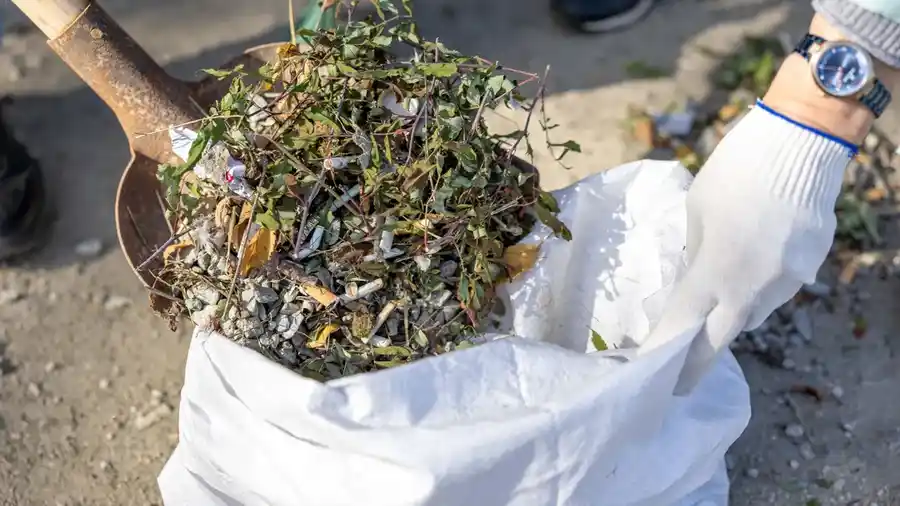
Bulk mulch wins for larger beds, while bagged mulch wins for tight access, small projects, and storage control. That split is simple, and it saves the most money and effort because the wrong format forces extra handling.
Picture this: you need to cover a whole front yard bed, but the truck cannot back close to the edge. Bulk mulch can still make sense if the driver can drop it within reach of a wheelbarrow or tarp path. If the drop point is awkward, bagged mulch may be faster even if it means more lifting.
Bulk mulch usually comes by cubic yard, and it is the right fit when you are covering many square feet in one pass. Bagged mulch is easier to stage in a garage, side yard, or shed, and it is easier to move in stages. The trade-off is labor. Bags are clean to store and simple to count, but they create more plastic waste and more trips from pile to bed.
| Criteria | Bulk mulch | Bagged mulch | Winner for… |
|---|---|---|---|
| Volume | Best for bigger jobs | Better for small jobs | Large beds and long borders |
| Access | Needs truck room | Fits tight spaces | Narrow driveways |
| Storage | Needs space fast | Easier to stage | Slow, phased projects |
| Handling | More shovel work at once | More lifting, less shoveling | Solo homeowners with limited equipment |
| Cleanup | Can spill during unloading | Cleaner unit handling | Finished yards |
| Flexibility | Harder to split up later | Easy to stop and start | Weekend work |
| Waste | Usually less packaging | More plastic waste | Buyers who care about disposal |
| Cost control | Better when volume is known | Better when you need only a little | Small correction jobs |
Bulk is the better call for a long run of beds, but it punishes poor math. Bagged is the safer choice if you do not know the exact amount yet, if the site is awkward, or if you have to keep material dry for several days.
- Choose bulk if you have open access and a clear estimate of yardage.
- Choose bags if the truck cannot reach the site or you need to store the mulch in a small footprint.
- Skip bulk if the only landing spot is soft ground or a slope that may spread the pile.
- Skip bags if you are covering a large yard and hate handling dozens of units.
How do I plan a mulch delivery that won’t turn into extra labor?
You plan it by matching the truck, the drop point, and the spread path before the order is placed. That sounds basic, and it is where most headaches begin.
Picture this: you have a driveway, a gate, a lawn, and maybe a sidewalk in the way. The delivery only goes smoothly if you can answer three questions in advance: where the truck enters, where the pile lands, and how you will move material from that spot to the beds.
A good delivery plan starts with measurement. Know the square footage of the beds, the estimated cubic yards needed, and the width of any gates or side yards the crew must pass through. If the drop point is more than a short wheelbarrow run from the beds, the pile becomes a second job. If the truck will need to cross a lawn, expect rutting unless the ground is firm and dry.
The easiest deliveries happen on hard surfaces near the work zone. A driveway drop beats a lawn drop almost every time, because it keeps the pile contained and makes cleanup simpler. If the driveway is shared or narrow, talk through the unloading sequence before the truck arrives. A delivery that arrives with no one on-site to direct it often ends up in the least convenient place. In 2023, the U.S. Environmental Protection Agency reported that yard trimmings made up about 12% of municipal solid waste generation by weight, so clean staging matters when you are trying to keep outdoor work efficient.
Access beats speed.
- Measure the driveway and gate width before ordering.
- Mark the drop point with visible stakes, cones, or chalk.
- Keep cars, toys, bins, and hoses out of the path.
- Tell the supplier about slopes, low branches, and soft turf.
- Ask whether the delivery is dumped loose, stacked, or palletized.
When does haul-out make more sense than covering over old mulch?
Haul-out makes more sense when the old mulch is compacted, moldy, contaminated, or too deep to simply refresh. Covering bad material with new mulch usually hides the problem for a few weeks and creates a heavier cleanup later.
Picture this: you rake back the top layer and find hard crust, weed roots, broken edging, and half-buried trash. New mulch on top will not fix that. It just gives the bed a fresh color over an unhealthy base.
Old mulch can be left in place if it is still loose, decomposed in a normal way, and free of debris. In that case, a top-up often works better than a full removal. But if the bed has too much mulch already, or if the old layer is soggy and matted, hauling it out gives the roots, edging, and soil surface a cleaner reset. Haul-out also helps when you are changing mulch type, such as switching from coarse bark to fine shredded material.
This is where many generic guides get lazy. They treat “mulch” like one uniform material. It is better to consult a landscaping professional, because pine bark, shredded hardwood, dyed mulch, and leaf-heavy composted mulch age differently, smell differently, and break down at different rates. A layer that still looks decent can still be too thick for healthy beds. The University of Florida IFAS Extension and Purdue Extension both note that mulch depth and material type affect plant health and maintenance needs.
Do not keep piling on forever.
- Haul out when the layer is matted or sour-smelling.
- Remove mulch that contains weeds, trash, plastic, or pests.
- Strip back excess depth before adding new material.
- Reuse only the clean, loose portion if the bed is still healthy.
- Schedule haul-out before delivery if you want the new pile placed cleanly.
Where should mulch be stored before use?
Mulch should be stored on a hard, raised surface and kept out of standing water. If rain is likely, cover it loosely so it sheds water without trapping heat and moisture in the pile.
Picture this: the truck has left, the beds are not ready, and the pile is sitting in the only open corner of the yard. That is when storage decisions matter most, because a good pile stays usable and a bad one turns crusty, wet, or stained.
A practical storage spot is flat, accessible, and not directly against siding or fencing. A driveway is usually better than grass because it keeps the pile cleaner and easier to move. If the mulch must sit for more than a short time, put down a tarp or pallet base so the bottom edge does not wick moisture from the ground. If you cover the pile, leave some air exchange. A sealed wrap can trap moisture and heat. The risk is higher with long storage, especially after rain.
Storage gets trickier with dyed mulch. The color can bleed if it is left in rainwater runoff, and that runoff can stain concrete or pavers. That is one reason I would rather see dyed material stored on a protected pad than on bare soil. Bagged mulch has its own risk: torn bags can split at the seams, and once one bag fails, the whole stack becomes harder to keep dry.
For longer storage, keep these basics in mind:
- Put the pile on pavement, gravel, or a pallet base.
- Keep it away from downspouts and low spots.
- Cover the top if rain is coming, but do not bury the pile airtight.
- Move it before it sits through multiple storms.
- Separate fresh mulch from old composted material so you do not mix textures.
What’s the honest side-by-side on delivery, haul, and storage?
The honest answer is that delivery is the easiest part if access is good, haul-out is the hardest part if the old layer is bad, and storage is the part that quietly ruins the job if you ignore weather. That is the order I would use when planning the work.
Picture this: you have one truck window, one crew, and one chance to avoid moving the same pile twice. The best decision is the one that reduces handling, but only when it still fits the site. The worst one is the one that creates a pile you cannot place, cannot store, or cannot spread before rain hits.
| Criteria | Delivery focus | Haul-out focus | Storage focus | Winner for [condition] |
|---|---|---|---|---|
| Main goal | Get new mulch on site | Remove bad or excess material | Keep mulch usable until spread | The cleanest site with the least handling |
| Best surface | Driveway or hard pad | Dump area or truck access route | Pavement, gravel, or pallet base | Stable, dry ground |
| Main risk | Bad access | Extra labor and debris | Water damage and staining | The stage that matches the weak spot |
| Best use case | New beds, large installs | Old, compacted, or dirty beds | Staged projects | Projects spread over several days |
| Time sensitivity | One delivery window | Depends on cleanup volume | Weather-driven | Jobs with a fixed schedule |
| Equipment need | Truck, tarp, wheelbarrow | Rake, shovel, cart, loader | Cover, base, tarp | Bigger properties |
| Failure mode | Truck cannot reach the spot | Bed is still junk underneath | Mulch spoils before use | Limited space and poor drainage |
| Cost pressure | Transport fee and access fee | Labor cost | Wasted material | Tight budgets |
Delivery wins when the beds are ready and access is open. Haul-out wins when the old layer is beyond salvage. Storage matters most when the project is stretched over time, because a pile that sits wrong can undo a good order.
The practical verdict on each choice
Delivery is best for the buyer who knows the yardage and has a clear route. It loses when the site is tight, wet, or crowded with cars and tools. Haul-out is best for the buyer starting from a messy bed that needs a reset, not just a refresh. Storage is best when the mulch must wait, but it demands the most discipline about moisture and drainage.
The wrong choice is usually the one that assumes the site is simpler than it is.
Which option should I choose for my yard?
Choose bulk delivery if you have open access, a clear storage spot, and a large bed area. Choose bagged mulch if your driveway is tight, your project is small, or you need to stage the work over several days. Neither is right if the bed is already overloaded and the old layer should be hauled out first.
Picture this: you are standing in the yard with a tape measure and no appetite for extra trips. The right call is the one that matches the site, not the one that looks cheapest on paper.
If the beds are healthy and only need a fresh layer, delivery plus top-up is the cleanest path. If the mulch is matted, sour, or full of junk, haul-out comes first. If the weather is unstable and the schedule is split, storage becomes the main issue and bagged mulch may save the day. The decision tree is simple once you stop treating mulch as one uniform job.
What are the exception scenarios that flip the usual advice?
The usual advice flips when the site is small, the weather is bad, the access is bad, or the old mulch is contaminated. In those cases, the “best” choice changes fast.
Picture this: a narrow side yard, a rainy forecast, and a pile that needs to stay clean for three days. A bulk drop that would be efficient on a sunny open lot can become a mistake in a cramped residential setting.
-
Tight urban access
Bagged mulch can beat bulk when a truck cannot safely reach the drop point. The extra handling is still better than a blocked delivery or damaged lawn. -
Rain within 24 hours
Storage matters more than convenience. If the pile will sit through weather, a covered, raised staging area matters more than getting the biggest load possible. -
Severely overmulched beds
Haul-out wins. Adding new material on top of too much old mulch makes the bed look finished while burying a real problem. -
Small repair jobs
Bagged mulch is often the better fit for patching a few beds, matching color, or touching up a front entry where a full delivery would be overkill.
Exceptions are not edge cases. They are the jobs that pay the bill.
How do I keep mulch from becoming a second cleanup job?
You keep mulch from becoming a second cleanup job by controlling where it lands, where it sits, and how long it waits. That is the whole game.
Picture this: the pile is in the right place, but the surface is wet, the tarp is loose, and the runoff is staining the concrete. The material is fine. The storage choice is not.
The best habits are boring, and that is why they work. Drop on hard ground if possible. Keep the pile off wet soil. Move it promptly. Cover only when weather demands it. Do not stack it against walls or let it block drainage. These steps sound small, but they decide whether the mulch spreads cleanly or turns into a muddy chore.
A final point that most generic guides skip: ask about disposal before haul-out starts. Old mulch mixed with trash, treated wood, or landscape fabric may not belong in the same pile as clean organic material. That changes where it can go and how it should be loaded. If you treat everything as one waste stream, you create a mess that takes longer to clear. The U.S. EPA advises checking local yard waste rules because disposal options vary by municipality.
The cleanest mulch job is the one with fewer moves.
FAQ
How far in advance should I schedule mulch delivery?
You should schedule it early enough to clear the site and be present for the drop. If the beds still need prep, book the delivery only after you know the haul-out plan and storage spot. A delivery window with no site prep usually creates more labor than it saves.
Can I leave mulch in the driveway for a few days?
Yes, if the driveway is dry, stable, and not needed for vehicle access. Cover the top if rain is coming, and keep the pile away from downspouts or low spots where runoff pools. If the driveway must stay open, bagged mulch or a smaller staged load is the safer choice.
Do I need to remove old mulch every year?
No, not every year. If the old layer is loose, clean, and not too deep, a top-up can work. Remove it when it is matted, contaminated, or already too thick for healthy bed depth.
What is the biggest mistake people make with mulch storage?
They leave it on bare ground in a low spot and assume it will stay fine. Water from below and rain from above can both change the pile fast. A raised, dry storage base solves more problems than most people expect.
Is bagged mulch always better for small jobs?
Not always, but it often is. Bagged mulch is easier to store, move, and ration in tight spaces. The downside is more handling and more packaging, so if you have open access and a larger bed, bulk can still be the better fit.
Drafted with AI; not yet reviewed by a person.
Leave a Reply