Last updated: October 31, 2026
Quick answer: For most properties, application by landscape area works best when you split the site into zones first and use the most controlled method for small or sensitive areas. On open turf, a broad method often fits better. On a 200-square-foot patio edge, a mulched bed, or a one-acre lawn, the area should decide the tool. For label-specific direction, consult the product label and a qualified landscape professional; EPA pesticide label guidance and OSHA safety guidance both stress following the label and the site conditions. EPA OSHA
Application by landscape area means choosing the right way to apply a product, material, or treatment based on the specific outdoor zone it will cover: lawn, planting beds, paths, slopes, patios, retaining walls, or hard-to-reach edges. The right method depends on the surface, the goal, the runoff risk, and how much precision the area needs.
If you want the short answer, use the most controlled application method for small or sensitive zones, and the fastest broad-coverage method for open, uniform areas. That rule is useful, but the site should still decide whether control or coverage matters more.
A landscape professional reads by area first because the site itself decides the method. A 200-square-foot patio edge, a mulched bed under shrubs, and a one-acre lawn do not reward the same approach.
Key takeaways
- Open, uniform areas favor broad application methods because speed matters more than pinpoint control.
- Tight, irregular, or sloped areas favor hand placement or targeted tools because drift and runoff become the real cost.
- The “best” method changes when the surface is porous, wet, windy, shaded, or close to drains.
- A good plan starts with zone mapping, not with the product label.
- The wrong application method usually fails by overapplying, underapplying, or placing material where it cannot work.
What “application by landscape area” actually means

Application by landscape area means matching the application method to the physical character of each part of a site. In practical terms, that means separating the landscape into zones such as turf, beds, trees, paving, walls, and slopes, then deciding how each one should receive material.
This approach matters because the same product behaves differently on different surfaces. A granular fertilizer dropped on a dry lawn can be spread evenly with a rotary spreader, but the same granules on a narrow bed edge need hand control or a drop-style tool. Liquid treatments face the same issue, so consult a professional when the zone is tight, sensitive, or near drainage. A sprayer that works well across a broad lawn may be too blunt near ornamentals or drains. OSHA, EPA guidance on label use, and local environmental rules also matter for many landscape chemicals, so the label is not optional reading; it is the governing document. EPA OSHA
The most useful way to think about it is this: the landscape area determines the precision required, and the precision required determines the tool.
That is why a “one tool for everything” plan usually disappoints. It saves setup time, but it often creates overspray, overlap, skipped patches, or contamination in the wrong zone. The right method is not the one with the most features. It is the one that fits the area’s shape, sensitivity, and exposure.
How do I choose the right application method for each landscape area?
Choose the method that gives enough control for the most sensitive part of the area, then scale up only when the zone is uniform and low-risk. That is the decision rule that keeps the process sane.
The choice usually comes down to five variables:
- Area size: A small bed edge rewards hand placement; a broad lawn rewards a spreader or sprayer.
- Shape: Rectangles are easy to cover evenly. Curves, corners, and islands create overlap problems.
- Surface type: Turf, mulch, gravel, concrete, and stone absorb or shed material differently.
- Exposure: Wind, slope, drainage paths, and nearby water change how much drift or runoff you can tolerate.
- Material form: Granular, liquid, mulch, compost, seed, herbicide, pesticide, or stain all behave differently.
A common beginner mistake is to start with the product rather than the area. That reverses the job. The area tells you whether the material can be broadcast, banded, spot-treated, injected, watered in, or placed by hand, and a professional can help when the area is borderline.
A second mistake is to assume “more even” always means “better.” On a wide lawn, even coverage is the goal. Near a patio or pond edge, even coverage can be the wrong goal if it sends material into the wrong place. Precision beats elegance in sensitive areas.
For many residential sites, a practical workflow is to divide the property into 4 to 6 zones, then assign a method to each. A typical plan might use a rotary spreader for open lawn, a hand scoop for bed transitions, a backpack sprayer for weeds along a fence, and a spot tool for cracks in paving. That kind of zoning keeps application practical without sacrificing control.
Open lawns: when broad coverage is the right answer
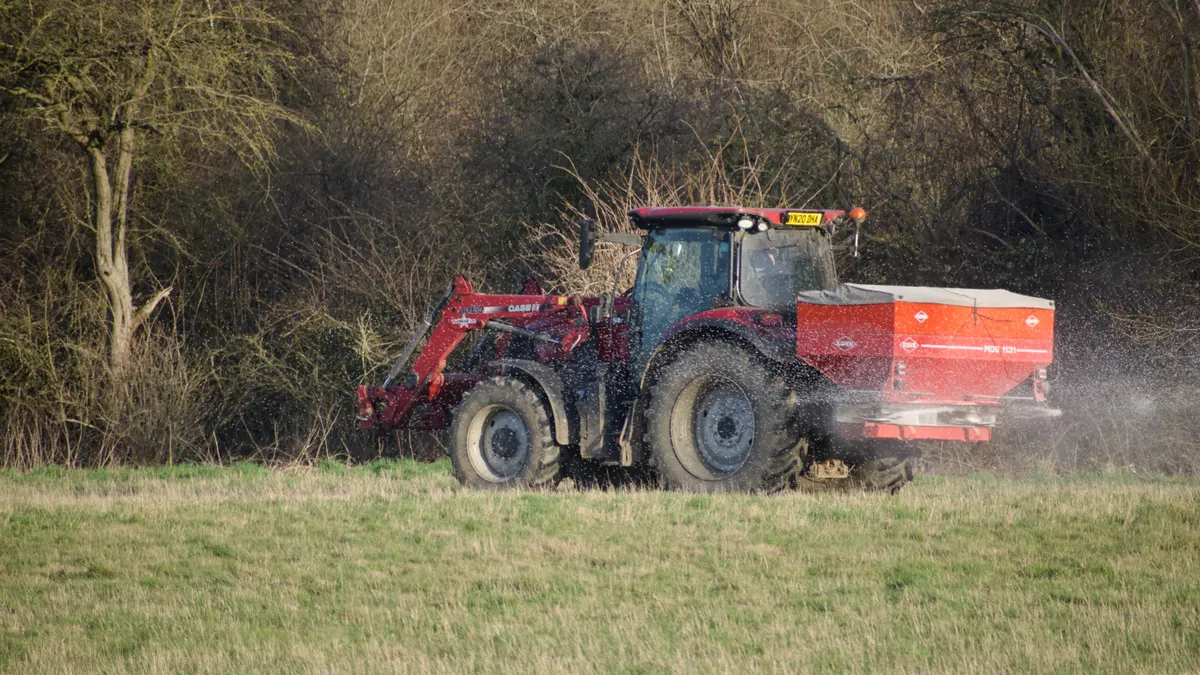
Open lawns win with broadcast methods because uniformity matters more than surgical precision. A straight rectangular turf area with few obstacles is the one place where a spreader or boom-style application makes the most sense.
For granular products, a rotary or drop spreader is usually the default choice on turf. The appeal is simple: the area is open, the product is meant to land broadly, and a consistent pattern reduces visible striping. For liquid products, a calibrated sprayer can cover turf quickly, especially when the label calls for a uniform spray pattern.
According to USDA turf guidance, calibration is part of applying turf inputs correctly, because output changes with walking speed, spread width, and equipment setting. USDA NRCS
The strength of this approach is speed with consistency. If the lawn is large, a controlled broadcast tool is usually easier to keep even than hand placement. That said, the weakness is obvious: broadcast methods punish bad calibration. A spreader set too wide or walked too fast leaves bands. A sprayer with uneven pressure leaves drift, puddles, or missed stripes. The larger the area, the more obvious the error.
This method is a good fit for:
- Flat or gently sloped turf
- Lawns with few obstructions
- Repetitive tasks like fertilizer, seed, or general lawn treatment
- Users who can calibrate equipment before use
It is a poor fit for:
- Small lawns broken up by beds, walkways, and patios
- Areas that slope toward drains or water features
- Sites with ornamental plantings pressed tight to the turf edge
- Anyone unwilling to calibrate equipment first
A useful mental check: if the area can be mowed in long, uninterrupted passes, it can usually be treated in broad passes too. If mowing requires constant correction, a broadcast method will probably waste product at the edges.
Beds, borders, and planting pockets need precision, not speed
Beds, borders, and planting pockets win with targeted placement because the margin for error is small. These zones are where most “almost right” applications become visible mistakes.
A flower bed under shrubs, a narrow strip along a fence, or a tree ring with exposed roots does not reward broad application. Hand placement, shielded application, or a precision nozzle gives better control than a standard broadcast setup. The reason is physical, not aesthetic: these areas often contain desirable plants close to the target zone. A few inches of overspray can damage foliage, stain hardscape, or move into mulch where it behaves unpredictably.
The main advantage here is control. You can put material where it belongs and stop at the edge. The drawback is labor. Precision work is slower, more tiring, and easier to underdose if you rush. It also demands better judgment, because the user must decide whether a material belongs on the soil surface, the mulch layer, or directly on the target plant zone.
This method is best for:
- Narrow beds and foundation plantings
- Tree wells and shrub rings
- Mixed plantings with different sensitivities
- Edges near walls, walks, and drains
It is not for:
- Wide, open lawn areas
- Users trying to finish fast without checking overlap
- Products that require even broadcast distribution over a broad area
One specific caution: mulch changes how these areas behave. Fine mulch may hold material near the surface, while coarse mulch can let granules roll, and thick organic layers can intercept liquids before they reach the soil. That means the same rate can perform differently in two beds only a few feet apart.
Slopes, drainage lines, and edges are where the method matters most
Slopes and drainage lines demand the most conservative application method because gravity turns minor mistakes into movement. On these areas, the question is not only “where does the product go?” but also “where will it go after the next rain or irrigation cycle?”
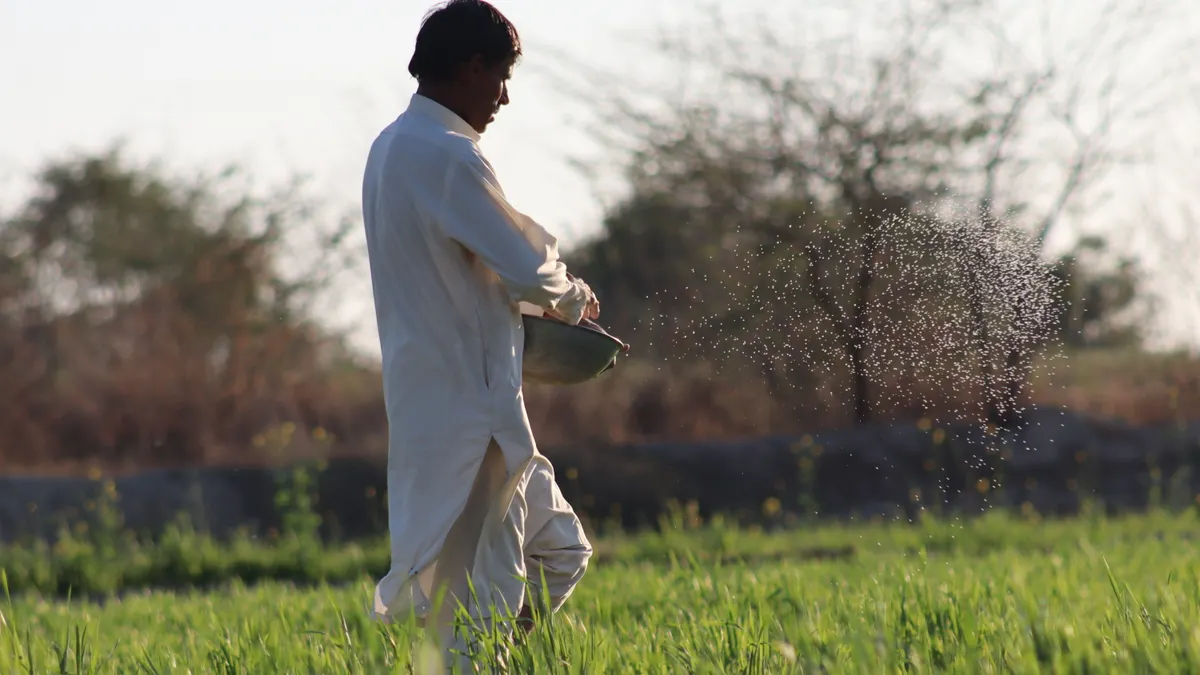
A slope should usually be treated in smaller sections with tighter control, lower output, or a placement method that reduces movement. Banding, spot placement, or carefully metered application often makes more sense than a heavy broadcast pass. Near swales, culverts, and hard edges, the goal is to avoid material migration into stormwater paths or adjacent property.
The strength of a cautious method is obvious: less runoff, less drift, and less waste. The weakness is that it takes planning and often more passes. A steep bank that is easy to reach but hard to hold may need a different tool than a flat courtyard bed beside it.
This is also where many generic guides get things wrong. They treat all “outdoor application” as if the ground were level and the weather still. It is not. A 10-degree slope with irrigation overspray, wind, and a nearby drain behaves very differently from level turf. Even when no exact threshold is available, the practical rule is simple: the more movement the site can create, the smaller and more controlled the application should be.
This method is right for:
- Sloped turf
- Rain gardens and drainage-adjacent zones
- Terrace edges
- Areas where runoff matters more than speed
This method is wrong for:
- Heavy, broad coverage that depends on uniform spread
- Any job where the applicator has not considered downstream movement
- Sites where label instructions or local rules require tighter placement control
Which method wins for lawns, beds, hardscape, and slopes?
The answer is different for each area, and that is exactly why the landscape should be divided before any application begins. The table below shows the practical head-to-head comparison.
| Criteria | Broadcast application | Targeted application | Winner for this condition |
|---|---|---|---|
| Large, open turf | Covers broad areas quickly with fewer passes | Slower and harder to keep consistent over wide spaces | Broadcast application |
| Narrow beds and borders | Higher risk of overspray or overlap at edges | Places material where it belongs with tighter control | Targeted application |
| Slopes and runoff-prone zones | More likely to move material off target | Lets the applicator reduce movement and dose area by area | Targeted application |
| Uniform seed or fertilizer coverage | Usually the best fit for even distribution | Can create patchiness if done by hand | Broadcast application |
| Mixed plantings near ornamentals | Too blunt for close spacing | Better when plants need separate treatment | Targeted application |
| Speed on a one-zone site | Faster for repetitive, uniform work | Slower because each area needs separate attention | Broadcast application |
| Precision around hardscape | Harder to avoid staining or drift onto paving | Better for edges, cracks, and isolated spots | Targeted application |
| Risk of waste | Can waste material at turns, overlaps, and boundaries | Can waste time, but usually not as much material | Targeted application |
| Best use case | Consistent coverage across a broad, simple area | Controlled treatment of small, sensitive, or irregular areas | Depends on the area |
The table shows the real pattern: broadcast methods win on large, regular zones; targeted methods win on complexity. That sounds obvious, but it is the most important decision in the whole process. If the site is mostly one open field of turf, go broad. If the site is a patchwork of beds, edges, and slopes, go controlled first and fast second.
When the job is not really one application problem
Sometimes the right answer is not choosing a better application method. It is changing the job into smaller jobs. That is the move most generic guides skip, and it is often the smartest one.
A mixed property with lawn, foundation beds, gravel strips, and a slope is not one area. It is four different areas that happen to touch. Trying to cover them with one method usually causes the least suitable part of the site to dictate the whole process. That is backwards.
Reframe the job when you see any of these conditions:
- The area changes surface type every few feet
- The site has protected plantings, drains, or water features nearby
- The product label requires separate treatment zones
- One part of the property needs accuracy and another part needs speed
- Weather or slope makes some zones unsafe for broad application
In those cases, the best plan is a split method. Use a broadcast tool for the open zone and a targeted tool for the delicate zone. Keep the transitions clean, and do not force one pass to solve two different problems.
This is also where calibration matters most. A tool that is perfect for the open lawn may be completely wrong for the flower bed. Separate setup, separate checking, and separate cleanup are not extra bureaucracy. They are what keep one zone from contaminating the next.
If the property is large enough, that split approach is usually the professional standard. It is slower to plan and faster to execute correctly.
The verdict: which approach to choose and why
Choose broadcast application if the area is broad, level, uniform, and tolerant of even coverage. Choose targeted application if the area is narrow, mixed, sloped, edge-heavy, or close to plants, drains, or hardscape. Neither if the site is so varied that you have not divided it into separate zones first.
That is the cleanest recommendation. It is not a compromise; it is the right match between area and method.
If the question is which one is “better,” targeted application is safer in more situations because it reduces mistakes at the edges. If the question is which one is more efficient, broadcast application wins on open turf and other simple zones. The wrong choice is trying to use one method for the whole property when the property clearly has more than one kind of area.
The most common failure mode is treating the landscape as a single canvas. It is not. It is a set of surfaces with different risks. Once that is clear, the application choice becomes much easier.
What people get wrong about landscape-area application
The biggest mistake is assuming the product matters more than the area. In reality, the area determines whether the product can be placed correctly at all. A great fertilizer or treatment becomes a poor result if it lands in the wrong zone.
The second mistake is ignoring the transition lines. Most of the trouble happens at borders: turf to bed, bed to patio, slope to drain, grass to gravel. Those are the places where overlap and drift create visible problems.
The third mistake is skipping calibration because the job looks “simple.” A 5-gallon sprayer, a hand spreader, or a backpack unit can all mislead the user if output and pace are not checked first. Even when the exact rate is set by the label, the human part of the process still matters.
The final mistake is forgetting that weather changes the site. Wind, wet foliage, hot pavement, and heavy irrigation all affect how material behaves. A method that works at 8 a.m. may be a bad choice by 2 p.m.
FAQ
What is the simplest way to decide where to use each application method?
The simplest rule is to use broad application on open, uniform areas and targeted application on small, irregular, or sensitive areas. That split handles most residential landscapes without overcomplicating the job. When in doubt, divide the site into zones before you choose a tool.
Can I use one spreader or sprayer for the whole landscape?
You can, but it is usually a compromise, not the best choice. One tool may cover multiple zones, yet the area with the tightest tolerance will usually suffer. A single setup works best only when the whole site is similarly open, level, and consistent.
Why does slope change the application decision so much?
Slope changes the decision because material can move after it lands. Even a careful pass can drift downslope, wash toward drains, or collect unevenly after watering. That is why smaller, more controlled applications are usually safer on banks and runoff-prone areas.
Is precision always better than broadcast application?
No. Precision is better for small or sensitive areas, but it is slower and can be inefficient on large open spaces. Broadcast application is better when the goal is even coverage over a simple area, such as a broad lawn. The best method depends on the zone, not on the tool alone.
What should I do if the property has mixed surfaces?
Break the property into separate zones and assign a method to each one. A lawn may get a broadcast pass, while beds, edges, and slopes get targeted treatment. Mixed surfaces are the strongest argument for a split plan instead of a single pass over everything.
Drafted with AI; not yet reviewed by a person.
Leave a Reply