Last updated: October 31, 2026
Quick Answer: For Bulk Mulch vs Bagged Mulch: Which Buying Format Fits Your Project?, bulk usually fits larger jobs and bagged mulch fits smaller, tighter ones. Bulk is the better buy for large beds, long driveways, and any job where a delivery truck can dump close to where the mulch will be spread. Bagged mulch wins when the project is small, the access is tight, or you need cleaner handling and slower use over time. If the job is modest and control matters more than speed, choose bags; if the job is broad and volume matters, choose bulk.
I write about Bulk Mulch vs Bagged Mulch: Which Buying Format Fits Your Project? often enough to know the mistake people make: they compare the material, not the format. The format changes delivery, labor, storage, waste, and how smoothly the project goes.
Key takeaways
- Bulk mulch is usually the right fit when the project covers a lot of ground and the delivery truck can get close.
- Bagged mulch is the safer choice when the site is small, access is narrow, or you want to move material in controlled amounts.
- Bulk reduces packaging waste, but it creates a bigger handling job once it lands.
- Bags are easier to store and stage, but they create more trash and often mean more trips from the store or yard.
- The best format often depends less on “which mulch is better” and more on how much space, labor, and cleanup your project can tolerate.
The real difference between bulk mulch and bagged mulch
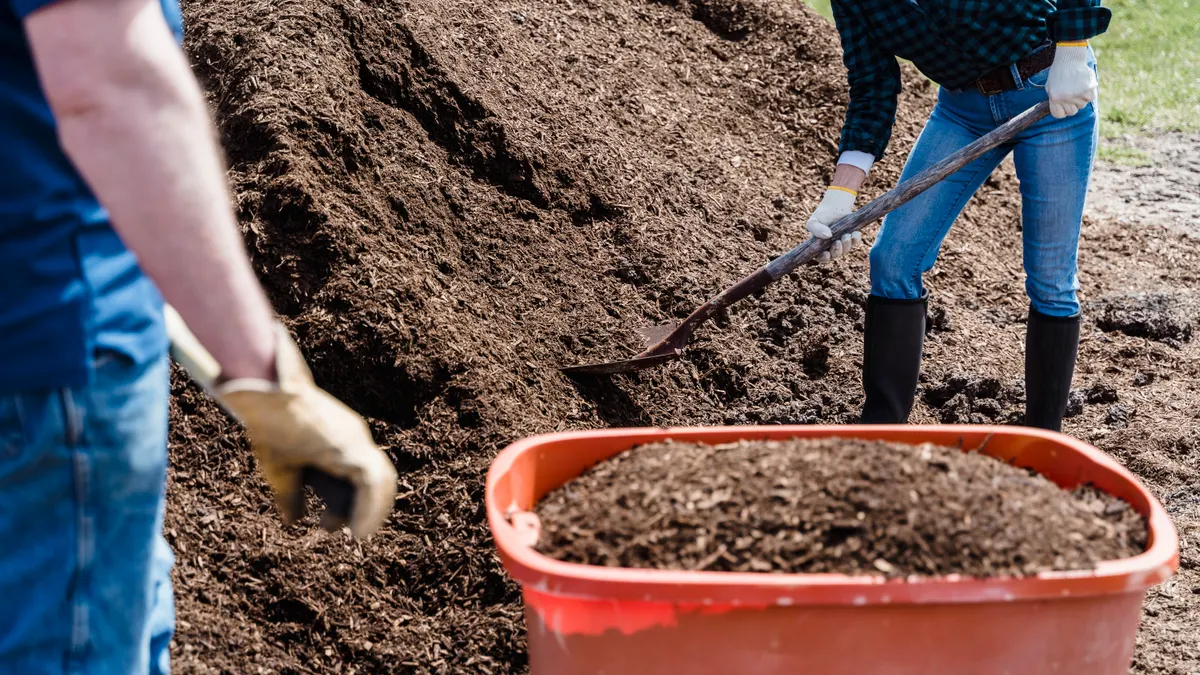
Bulk mulch is the practical choice for a project that needs volume, while bagged mulch is the practical choice for a project that needs control. That is the simplest way to separate them, and it matters more than brand, color, or wood type.
Bulk mulch usually comes from a landscaping supply yard in loose form and is delivered by a dump truck or similar delivery truck. The load is tipped onto a driveway, tarp, or staging area, then moved by shovel, wheelbarrow, or loader. That workflow is efficient when the bed area is large and access is decent. It can be clumsy when the only landing spot is far from the beds, or when the surface must stay clean.
Bagged mulch comes in sealed bags, usually sold through garden centers, home centers, or a landscaping supply yard. The bags are easier to stack, carry, and store. They also make it easier to stop at exactly the amount you need, which is useful for small repairs, front-yard refreshes, and projects with awkward access.
The choice is not about quality of mulch. It is about logistics. A 20-square-foot touch-up in a narrow side yard is not the same job as a full-property refresh across several beds. Bulk favors labor efficiency over precision. Bagged mulch favors precision over efficiency.
For a broader framework on sizing and format choices, the hub on mulch coverage and buying formats is the right next stop, but this page is about the format decision itself.
| Criteria | Bulk mulch | Bagged mulch | Winner for condition |
|---|---|---|---|
| Delivery convenience | One delivery truck drop can cover a large area fast | Easy to pick up in a car or small truck | Bulk for large projects; bags for no-truck access |
| Loading and handling | More shoveling, wheelbarrow work, and staging | Easier to carry by hand and place in small areas | Bagged for tight sites |
| Project size fit | Best for beds that need a lot of coverage | Best for small jobs and patchwork | Bulk for large jobs |
| Waste and storage | Little packaging waste, but a pile must be used quickly | More packaging waste, but bags store neatly | Bulk for low-waste delivery; bags for staged use |
| Cleanup | Loose material can scatter during unloading | Cleaner transfer, less loose spill | Bagged |
| Flexibility during application | Harder to pause and resume if the pile is exposed | Easy to use a few bags now and save the rest | Bagged |
| Site access | Needs room for a dump and for moving material | Works when access is narrow or awkward | Bagged |
| Time savings on big jobs | High, because one delivery can feed many beds | Lower, because each bag must be handled separately | Bulk |
| Risk of overbuying | Higher if the project was estimated loosely | Lower, because bags can be bought in smaller increments | Bagged |
Bulk mulch: who should actually use it, and who shouldn’t
Bulk mulch wins when the project is large enough that the delivery setup saves more effort than it creates. That usually means broad planting beds, long foundation runs, tree rings across a yard, or multi-bed refreshes where a full delivery truck drop is easier than hauling dozens of bags. The real strength is labor efficiency. One delivery can replace many store trips, many cardboard or plastic bags, and many repeated lifts.
The downside is just as real: bulk shifts the labor from shopping to handling. A pile of loose mulch needs space, a clear path, and enough time to move it before it spreads, dries, or gets scattered by wind. If the delivery point is far from the beds, the “savings” start disappearing into wheelbarrow trips. Bulk also creates a bigger consequence if the estimate is off, because a large loose pile is harder to hide, store, or return.
Bulk is the right call for the person with 2,000 square feet of beds, a driveway where a delivery truck can dump safely, and enough help to move the pile in the same day or next morning. It is also a strong choice for anyone who wants to reduce packaging waste and does not mind managing a temporary worksite.
Bulk is not for the homeowner with a narrow side gate, no room for a dump load, or a project that will be handled in 10-minute bursts over several weekends. It is also the wrong format for someone who wants to carry the mulch in a compact SUV and avoid a major cleanup afterward. If the site cannot absorb a loose pile without drama, bulk is the wrong tool.
Bagged mulch: the specific situations where it wins
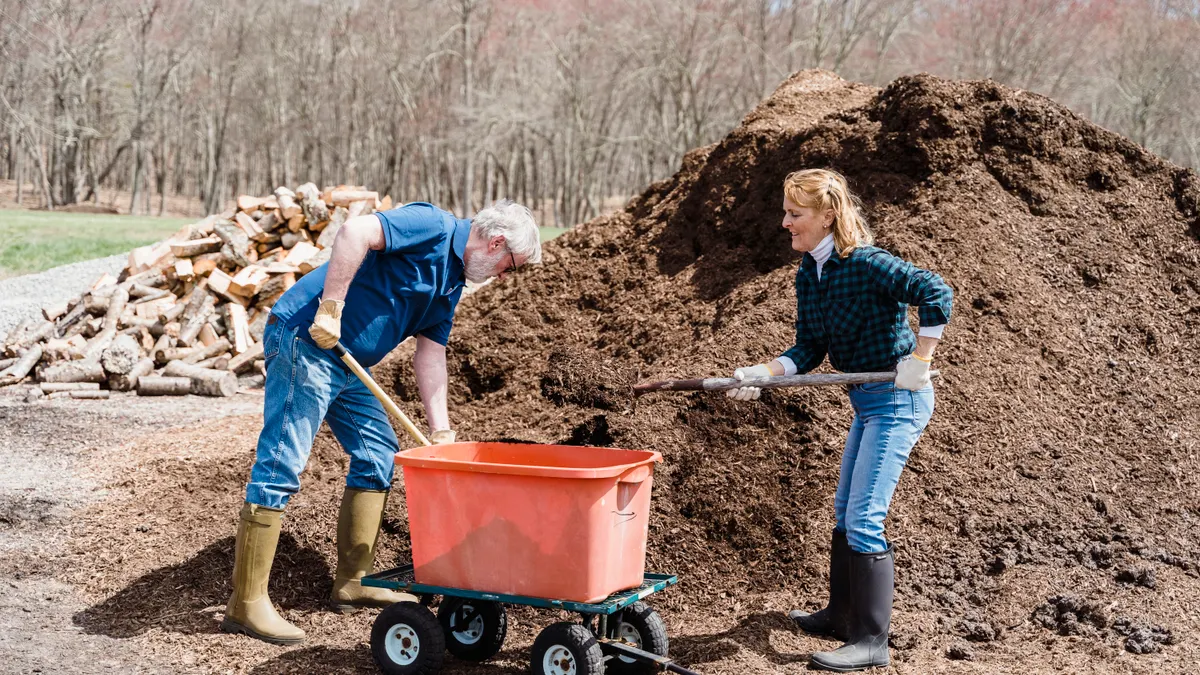
Bagged mulch wins when control matters more than raw efficiency. That is the format for a small front bed, a townhouse courtyard, a rental property with limited access, or any space where a full dump would be inconvenient or impossible. It is also the better fit when the project is spread across several weekends, because unopened bags can sit in a garage or shed more neatly than a loose pile.
The main advantage is handling. Bags are easy to carry, easier to move through a narrow gate, and easier to stage near the exact bed where they will be used. That makes bagged mulch attractive for people working alone, for older homeowners who want to avoid heavy shovelfuls, or for anyone who needs the project to stay tidy while it happens. A bag also gives a clearer sense of what is left, which helps when a project is broken into pieces.
The trade-off is obvious: bagged mulch adds packaging, more handling steps, and often more trips to get enough material. On a bigger project, those trips consume time fast. Bags also create more waste to dispose of, and the convenience premium can make the format feel expensive in labor even when the purchase itself seems straightforward.
Bagged mulch is not the right choice for a broad yard renovation where the work will require dozens of bags. It is also a poor fit if a delivery truck could drop a bulk pile closer to the beds and save several hours of hauling. The point of bagged mulch is precision and convenience at small scale, not efficiency at large scale.
The honest side-by-side
Bulk mulch wins on scale, but bagged mulch wins on control. That is the core trade-off every reader should weigh before buying.
Bulk works best when the project rewards a single drop and a lot of fast spreading. A landscaping supply yard can load a delivery truck with the material, and that can make a long run of beds feel manageable. The downside is the work does not end when the truck leaves. The pile has to be moved, protected, and used promptly enough that it does not become a nuisance. Bulk also assumes the site can accept a dump location without blocking cars, ruining turf, or creating access problems.
Bagged mulch is the cleaner logistics choice. Each bag can be carried where it is needed, stored until the project starts, and used in stages. That matters in front yards with limited parking, in narrow side yards, and in small projects where a loose pile would be absurdly large. The penalty is that each bag has to be handled separately, and the packaging becomes part of the job. For a larger project, that means repetitive lifting and a lot of spent time moving plastic or paper rather than mulch.
The table below is the fast read that matters most.
| Criteria | Bulk mulch | Bagged mulch | Winner for condition |
|---|---|---|---|
| Best for large beds | Yes | No | Bulk |
| Best for narrow access | No | Yes | Bagged |
| Best for staged weekend work | No | Yes | Bagged |
| Best for reducing packaging | Yes | No | Bulk |
| Best for minimizing handling steps | Yes | No | Bulk |
| Best for small touch-ups | No | Yes | Bagged |
| Best for one-and-done delivery | Yes | No | Bulk |
| Best for clean storage before use | No | Yes | Bagged |
Which one fits your project?
Choose bulk mulch if the project is large, the delivery truck can get close, and the goal is to cover a lot of ground with fewer trips and less packaging. Choose bagged mulch if the area is small, access is tight, or you need to move and store mulch in controlled increments. Neither is right if the job is so small that either format creates more hassle than it solves, or if the site cannot accept a loose delivery or repeated bag handling without damage.
That is the clean decision. Bulk is the format for volume and speed. Bagged is the format for access and control.
If the reader is deciding between a full-yard refresh and a few isolated beds, the answer is not subtle. The full-yard refresh belongs to bulk. The isolated beds belong to bags. If the project sits in the middle, the deciding factor is access: a driveway and open path push the choice toward bulk, while stairs, gates, and cramped storage push it toward bagged.
There is one more practical point that people miss: the right format also depends on how quickly the material will actually be used. Bulk makes sense when the schedule allows immediate spreading. Bagged makes sense when the work will happen over time and the mulch needs to wait in a clean, contained form.
When the choice flips
Bulk mulch stops making sense when the delivery path is the problem, not the amount of mulch. A tight urban lot, a steep walkway, or a spot where a dump load would block cars can turn bulk into a headache. In those cases, the extra labor of bagged mulch is the smaller burden.
Bagged mulch stops making sense when the project grows past the point of convenience. A few bags are easy. A long foundation run, multiple tree rings, and a wide front border can turn bagged material into a stack of repetitive lifts. Once the work starts to feel like hauling rather than mulching, bulk usually wins.
The decision can also flip if storage is the real constraint. A homeowner without room to keep a loose pile protected from weather or neighborhood traffic may find bagged mulch more workable, even on a medium-sized project. On the other hand, someone with a clean staging area and a straightforward spread pattern can make bulk feel far easier than dragging dozens of bags.
The rule is simple: if the project is being limited by access, choose bagged. If it is being limited by quantity, choose bulk.
The verdict
Bulk mulch is the better choice for larger projects, open access, and any job where a delivery truck can dump close to the work area and save hours of handling. Bagged mulch is the better choice for small projects, tight access, staged use, and situations where cleaner storage matters more than speed. Neither is right if the project is so awkward that either format would create more cleanup than value.
Drafted with AI; not yet reviewed by a person.
Leave a Reply