Last updated: October 31, 2026
Quick answer: Mulch for Trees: How to Ring a Tree Without Harming the Trunk means using a 2- to 3-inch layer in a wide, flat ring that stops before the bark. Keep the root flare visible, and leave the center open.
Mulch for Trees: How to Ring a Tree Without Harming the Trunk works best as a wide, flat ring that stops short of the trunk. Keep the mulch off the bark, expose the root flare, and shape the bed like a donut instead of a volcano.
What a good tree ring mulch looks like
A good tree ring mulch is a 2- to 3-inch layer spread in a broad circle, with a clear gap around the trunk and the root flare left visible. The shape matters as much as the material, because mulch piled against bark traps moisture, invites rot, and hides the flare where the trunk widens at the base.
Think of the finished bed as a donut: mulch on the ground, open space in the middle. That open center should be large enough that no mulch touches the trunk, even after rain or wind moves it. A simple steel rake, flat spade, and a garden fork are enough to build the ring.
If the tree already has a mulch mound, pull it back before adding anything new. The goal is not a taller pile; it is an even layer over the root zone. This is why the subject is tree ring mulch, not “mulch around the base.” The base is the one place that needs breathing room.
A ring also looks cleaner than a messy scatter of chips and leaves. More important, it gives the tree a stable soil surface without burying the lower trunk. For most home landscapes, that is the right trade-off: less decorative height, more tree health.
How do you ring a tree without touching the trunk?
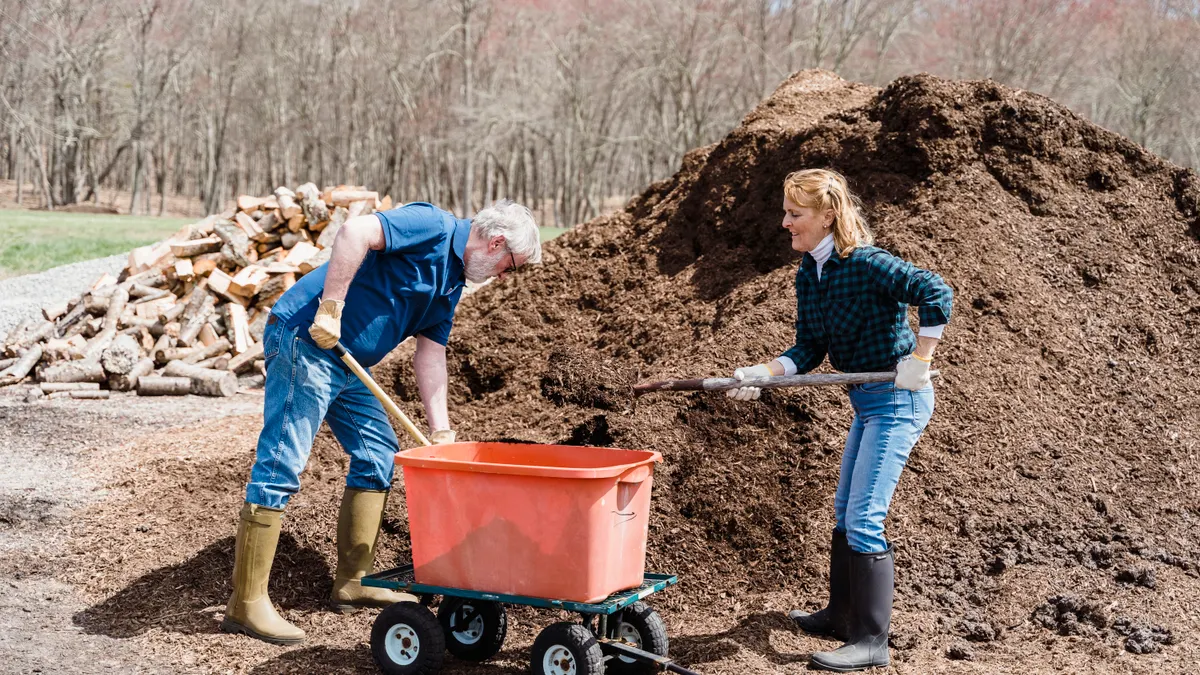
You ring a tree without touching the trunk by clearing the root flare first, then spreading mulch outward in a flat circle and stopping several inches away from the bark. The exact gap does not need a ruler to the millimeter; it does need to stay open after settling and watering.
Use this process:
- Inspect with a gloved hand and find the point where the trunk widens into the root flare.
- Pull with a rake all existing mulch back from the trunk until bare soil shows around the flare.
- Loosen with a hand fork any crusted mulch or matted chips so the layer can breathe.
- Spread with a shovel fresh organic mulch in a ring that is even from the trunk outward.
- Shape with a rake so the center remains open and the outer edge tapers gently into the lawn or bed.
- Check with your eye from several angles and make sure no mulch slopes up against the bark.
The result should be a shallow, level ring rather than a cone. If the mulch is deeper at the trunk than at the edge, it has become a volcano again. A flat ring is safer for the bark and easier to maintain after the next storm.
This method works well for young ornamentals and mature shade trees alike, as long as the trunk stays exposed. It is not the right fix for a tree with existing trunk wounds, active decay, or severe root problems; those need diagnosis, not a thicker mulch collar.
Why the root flare has to stay visible
The root flare has to stay visible because burying it keeps the lower trunk damp and can hide a problem until it is expensive to correct. The flare is not a decorative detail; it marks the transition from trunk to root system, and that transition should sit at or slightly above the surrounding soil.
When mulch covers the flare, moisture lingers at the bark. That does not help the tree “stay hydrated.” It creates the wrong kind of wetness in the wrong place. Bark that stays damp for long periods is more likely to soften, crack, or support decay organisms. The same goes for soil that builds up over the flare over time.
There is a second issue: hidden flare means hidden grade problems. If the tree was planted too deep, a mulch mound can mask that mistake for years. The tree may still live, but the buried flare can make root establishment harder. A ring that exposes the flare gives you a chance to see the tree’s base and correct the surface grade if needed.
This is why many arborists object to “mulch volcanoes.” The problem is not mulch itself. It is the shape and the contact point. If the flare is visible and the trunk is dry at the base, the tree has a far better chance of responding well to the mulch.
Which mulch works best for tree rings?
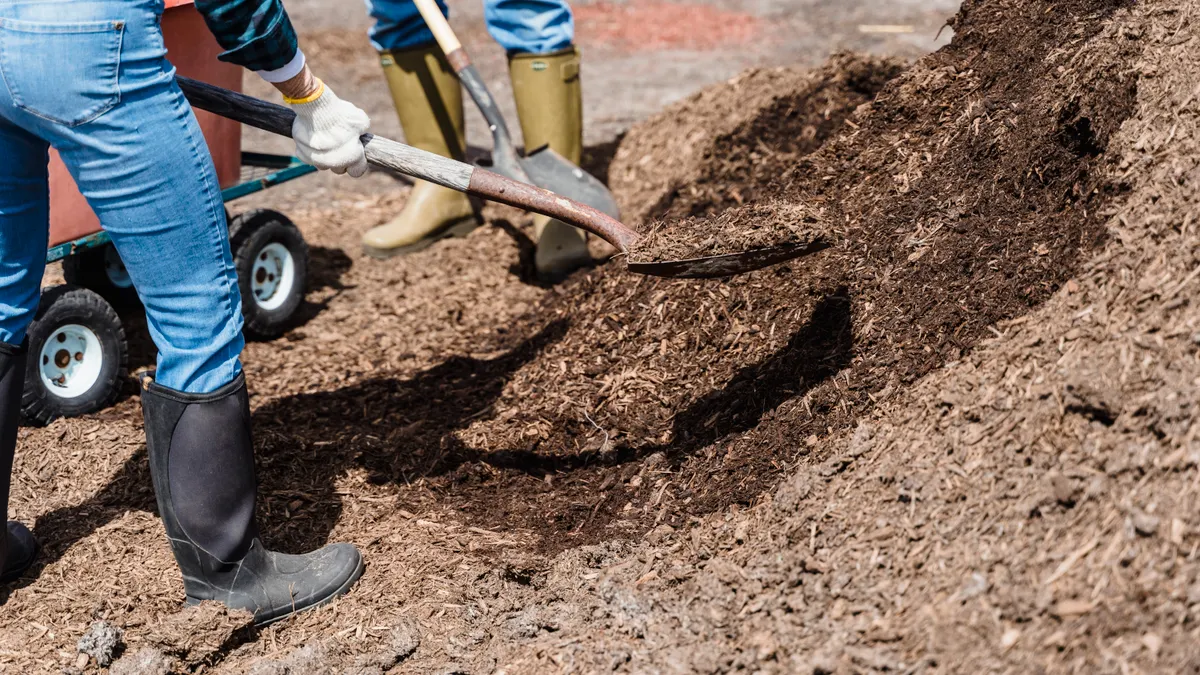
Organic mulch works best for tree rings because it breaks down slowly and feeds the soil over time. Shredded bark, wood chips, and similar arborist mulches are often good choices for most home trees, especially when the goal is a natural-looking ring that will not pack down hard.
Wood chips tend to hold up well and spread easily. Shredded bark gives a neater finish and usually stays in place on a slope better than loose chips. Leaves can also work if they are dry and not matted into a thick, soggy layer. Grass clippings are a poor choice around tree trunks because they compact, heat up as they break down, and can turn slimy after rain.
Avoid landscape fabric under the mulch in most tree rings. It can make maintenance harder, trap fine debris, and create a crust that blocks air and water movement over time. The better system is simple: soil, then mulch, then room for rain to reach the ground.
Color is a style choice, not a health feature. Black or dyed mulch does not make a tree healthier than natural brown mulch. If the tree ring is in a front yard where appearance matters, choose the material that matches the site and can be maintained without piling up. For many readers, that means one fresh layer of organic mulch and no extras.
How deep should the mulch be, and how wide should the ring spread?
The mulch should usually stay about 2 to 3 inches deep and extend out as far as the available root area allows. A wider ring is better than a thicker mound, because tree roots need oxygen and water movement near the surface, not a heavy blanket of material.
Depth matters because too much mulch acts like a barrier. A layer that is several inches too deep can hold water against the soil, slow gas exchange, and invite roots to sit in the wrong conditions. Too little mulch, on the other hand, disappears fast and does not suppress weeds or moderate temperature swings.
Width matters because tree roots spread far beyond the trunk. A ring that is only a foot wide looks tidy but does little for the tree. If the site allows it, expand the ring toward the dripline and beyond. Even a modest increase in width is better than building height at the trunk.
The right balance is wide, even, and low. If you are unsure how much material you need for a larger project, use the mulch calculator for landscaping projects linked from the main hub so you can size the bed before you start. That keeps the ring shaped correctly instead of forcing extra mulch into the center just to use it up.
Common mistakes that hurt trees
The most common mistake is piling mulch against the trunk, and it costs the tree a dry, healthy base. The fix is simple: pull the mulch back until the root flare is visible and keep the center open. A second mistake is making the ring too deep, which creates the same problem in a different form.
Another error is using a sharp mound that slopes up from the ground like a cone. That shape funnels water toward the trunk and keeps the bark damp after rain. A flat donut shape drains better and looks more intentional. A third mistake is edging so tightly around the trunk that the tree looks “finished” but has no breathing room. Clean edges belong at the outer border, not against bark.
People also refresh mulch by adding a new layer on top of the old one without removing what is already there. That can gradually bury the flare even if the first application was correct. Before topping up, rake back the old material and check the base. A 10-minute cleanup now can prevent a bigger correction later.
One more trap: using mulch to cover damaged soil or a badly planted tree. Mulch can improve the surface, but it cannot fix a trunk flare buried 4 inches below grade or roots circling under the stem. If the tree’s base already looks wrong, the ring is not the whole solution.
What to watch after the mulch is down
After the mulch is down, watch for settling, washout, and bark contact after the first heavy rain. A ring that looked perfect on day one can shift in a week, especially on slopes, under downspouts, or in windy yards.
Check the trunk base after watering or rain. If mulch has drifted inward, pull it back again before it hardens in place. A simple hand rake makes this easy, and a 5-minute touch-up every few weeks during the growing season can keep the ring in good shape.
Also watch the soil itself. If water puddles under the mulch and stays there, the ring may be too deep or the area may drain poorly. In that case, reduce the layer, widen the ring, or improve grading around the tree rather than adding more material.
Keep an eye on the tree’s bark where the trunk meets the ground. It should remain visible, dry, and unobstructed. If you can no longer see the flare, the ring needs correction. The best mulch job is the one that stays simple all season: no contact, no mound, no hidden base.
Key Takeaways
A safe tree ring is low, wide, and open at the trunk. The bark should never be buried, and the root flare should stay visible.
Organic mulch is the right material for most trees, but shape matters more than product. A donut beats a volcano every time.
If the ring needs constant correction, the problem is usually too much mulch, not too little. The fix is to pull it back, flatten it, and leave room around the trunk.
How far should mulch stay from a tree trunk?
Mulch should stay far enough from the trunk that it never touches the bark, even after settling. A clear gap around the root flare is the goal, not a tight collar. If the trunk is damp where the mulch meets it, the ring is too close and needs to be pulled back.
What shape should tree mulch be?
Tree mulch should be shaped like a donut, not a volcano. That means mulch spread in a flat ring with an open center around the trunk and root flare. The outside edge can blend into the lawn or bed, but the middle must stay bare so air and moisture do not sit against the bark.
Drafted with AI; not yet reviewed by a person.
Leave a Reply