Last updated: November 01, 2026
Key Takeaways
- Mulch does three jobs at once: it slows evaporation, blocks light from weed seeds, and cushions soil from heat and rain.
- Organic mulch is often the best value for many home gardens because it feeds the soil as it breaks down.
- Mulch choice gets easier when the plant, climate, and maintenance goal are clear.
- Organic mulch supports soil health.
Mulch choice changes how your beds hold water, block weeds, and feed soil. The right mulch for Mulch types, materials, and use cases depends on the job: wood-based mulch for most beds, stone for heat and drainage, and compost when you want to build soil. The guide below settles which material fits which use case, and which ones cause trouble fast.
Our Top 3 Picks at a Glance
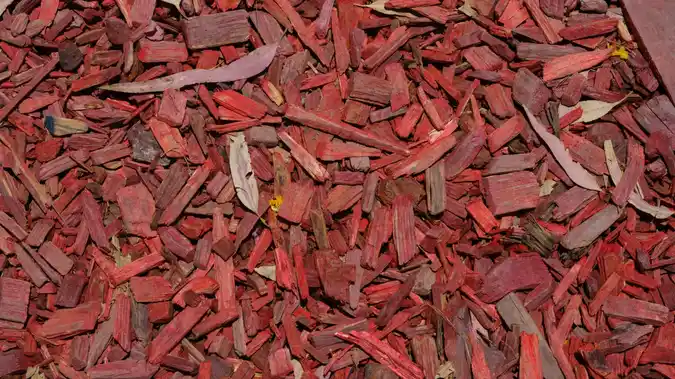
- #1 Best Overall: Shredded bark mulch for mixed landscape beds because it stays put better than many loose organic mulches and fits most planting plans.
- #2 Best Budget Pick: Free leaf mulch or shredded leaves for vegetable beds and around shrubs if you can source and shred them cleanly.
- #3 Best Heavy-Duty / Upgrade Pick: Inorganic gravel or stone mulch for hot, dry spots, slopes, and drainage-first designs where organic mulch breaks down too fast.
What mulch actually does in a yard
Mulch does three jobs at once: it slows evaporation, blocks light from weed seeds, and cushions soil from heat and rain. A 2 to 4 inch layer is the usual range for most organic mulches, and that depth is where most people either get the benefit or make a mess.
Picture this: you’re staring at bare soil around shrubs, a weed flush after rain, and hose water disappearing too fast. The fix is not “any mulch”; it’s the mulch that matches the bed, the climate, and the plant roots.
That sounds simple. It isn’t.
A mulch that works under roses can fail around tomatoes, and a mulch that looks polished in a front yard can be a bad fit in a vegetable bed.
Here’s the catch: mulch can help or hurt depending on how it’s used.
- Too thin, and weeds win.
- Too deep, and roots stay soggy.
- Piled against stems, and rot starts.
- Used on the wrong bed, and you end up fighting the material instead of the weeds.
For a plain-language standard on mulch depth and placement, the University of Minnesota Extension has a practical guide on landscape mulch: https://extension.umn.edu/planting-and-growing-guides/mulch-trees-and-shrubs
The U.S. Forest Service also has guidance on wood chips in landscape and tree care settings: https://www.fs.usda.gov/
The main mulch types and what they’re best at
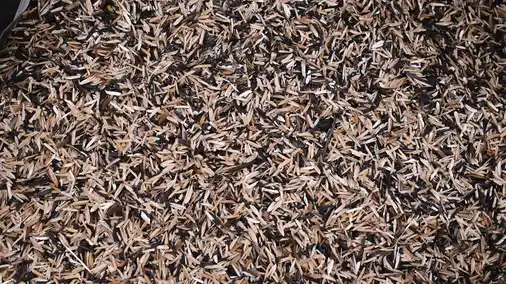
Organic mulch often wins for most home gardens because it feeds the soil as it breaks down. Inorganic mulch often wins in places where you want the surface to last, reflect heat, or keep gravel-like structure for years.
Picture this: you’re choosing between bark, compost, straw, and stone at the garden center, and every label says “natural” or “premium.” The real difference is not the marketing copy; it’s breakdown rate, weed control, and how the mulch behaves in rain.
1) Shredded bark and bark nuggets
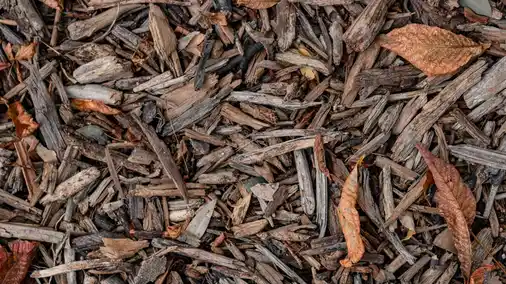
Shredded bark is often the safest all-around choice for ornamental beds, foundation plantings, and trees. It knits together better than big nuggets, so it resists washout on slopes and looks tidy longer.
The downside is simple: bark can dry out on top while the soil underneath stays uneven, and some nugget styles shift around more than shredded grades. In hot, windy sites, that means you may need to top it up sooner than you’d like.
- Best for: shrubs, perennials, tree rings, front-yard beds
- Good layer depth: about 2 to 4 inches
- Watch for: dyed bark with unknown wood sources, bark piled against trunks
2) Wood chips
Wood chips are coarse, irregular, and excellent where you want durable cover without a polished look. They are often cheaper than bagged decorative bark, and they can work especially well along paths, play areas, and larger plantings.
The trade-off is consistency. Because chips vary in size and species, they can look rougher and break down at different speeds. Fresh chips can also temporarily tie up nitrogen at the surface if they’re mixed into soil instead of left on top.
- Best for: trees, large beds, paths, informal landscapes
- Good layer depth: about 3 to 4 inches
- Watch for: mixing them into the soil, not applying them fresh against tender seedlings
The USDA Forest Service has long published guidance on using wood chips as mulch in landscapes and tree care settings. That material is worth reading if you want the science behind chip-based mulch choices.
3) Shredded leaves and leaf mulch
Shredded leaves are often one of the best values in the yard, and they’re often the easiest organic mulch to source if you already have deciduous trees. They decompose quickly, feed soil life, and work especially well in vegetable beds and under shrubs.
The drawback is lifespan. Leaf mulch can mat down if it’s applied in heavy sheets, and wet leaves without shredding can form a slimy layer that blocks air and water. Oak and similar leaves hold up better than thin, slippery leaves, but all leaf mulch works best shredded.
- Best for: vegetable beds, woodland beds, shrub borders
- Good layer depth: about 2 to 3 inches
- Watch for: whole leaves that mat, diseased leaves from infected plants
4) Compost
Compost is mulch with a soil-building job. It is a strong top-dressing for vegetable beds, annual flowers, and soil that needs structure, but it is not the best weed barrier because it is finer and more nutrient-rich than bark.
The upside is obvious: compost improves texture and helps feed crops. The downside is also obvious: it can wash away more easily, and weeds can germinate in it if it contains undecomposed material or stray seeds.
- Best for: vegetable gardens, annual beds, soil repair
- Good layer depth: about 1 to 2 inches
- Watch for: using it as the only weed barrier in high-pressure weed areas
For compost and soil matter basics, the USDA Natural Resources Conservation Service has useful soil health material, and many extension services explain compost’s role in surface amendment rather than long-term mulch.
5) Straw
Straw is a classic mulch for vegetable gardens because it is light, loose, and easy to move aside for harvest. It also helps keep fruit off wet ground, which matters for strawberries, squash, and low-growing crops.
The catch is quality. Hay is not straw, and hay often contains seeds that become weeds. Straw can also blow around in exposed sites if it is laid too thin.
- Best for: vegetable rows, strawberries, temporary seasonal cover
- Good layer depth: about 3 to 6 inches depending on fluffiness
- Watch for: seed contamination, wind displacement
6) Pine needles
Pine needles work well where you want a loose, airy mulch that does not pack down hard. They are especially useful around acid-loving plants and in sloped beds where many finer mulches slide away.
The drawback is coverage. Pine needles can be light and move in strong wind if they are applied too thinly, and they are not the fastest option for building soil organic matter.
- Best for: azaleas, rhododendrons, conifers, slopes
- Good layer depth: about 2 to 3 inches
- Watch for: thin coverage that leaves soil exposed
7) Rubber mulch
Rubber mulch is long lasting and stays in place well in some play and utility areas. It does not break down like wood mulch, so it can reduce topping-up chores in places where appearance matters less than durability.
The serious drawback is that it does not improve soil, and it can heat up in sun. It is also not a natural fit for vegetable beds or around plants where you want the ground to support soil life.
- Best for: some playgrounds, decorative non-edible areas
- Good layer depth: follow the manufacturer’s recommendation
- Watch for: heat buildup, no soil benefit, cleanup problems once installed
8) Gravel and stone
Stone mulch is the right answer in dry landscapes, around succulents, on drainage-heavy sites, and in places where you do not want organic matter piling up. It lasts a long time and can reduce erosion on the right site.
The flip side is blunt: stone does not feed the soil, can make beds hotter, and is harder to remove if you later change the planting plan. It also tends to collect leaves and dust, which means cleanup is real work.
- Best for: xeriscapes, cacti, drainage zones, paths
- Good depth: often 2 to 3 inches, depending on stone size
- Watch for: heat gain, weed seeds blown into the gaps, hard removal later
Which mulch fits which use case?
Mulch choice becomes easier when the plant, climate, and maintenance goal are clear. Shredded bark wins for curb appeal and general use; compost wins for food beds; stone wins where the bed must stay dry and permanent.
Picture this: you’re trying to mulch a whole yard, but one corner is a vegetable patch, another corner is a shaded shrub bed, and the driveway edge bakes in afternoon sun. One material won’t do everything well.
The best move is to match mulch to the bed instead of forcing one mulch across the property.
| Use case | Best mulch type | Why it fits | What to avoid |
|---|---|---|---|
| Ornamental shrubs | Shredded bark | Holds shape and looks clean | Thick nuggets that roll away |
| Tree rings | Wood chips or shredded bark | Durable cover, easy to renew | Piling against the trunk |
| Vegetable beds | Compost, leaf mulch, straw | Adds organic matter and works around crops | Stone or rubber in edible beds |
| Slopes | Shredded bark, pine needles | Stays put better than fine mulch | Light straw that blows away |
| Hot, dry landscapes | Gravel or stone | Lasts and reflects a dry-site look | Dark organic mulch that dries out fast |
| Woodland gardens | Leaf mulch, pine needles | Mimics forest floor conditions | Heavy stone that fights the setting |
| Play areas | Rubber mulch or approved surfacing | Durable, less frequent replacement | Organic mulch that breaks down fast |
For trees
Trees usually do best with wood chips or shredded bark in a broad ring, not a volcano around the trunk. A 2 to 4 inch layer spread wide helps conserve water and keeps turf from competing at the root zone.
The mistake to avoid is the “mulch mountain” pressed against bark. That keeps moisture against the trunk and can invite decay.
Big mistake.
For vegetable gardens
Vegetable beds need mulch that is easy to move, easy to refresh, and unlikely to block seedling emergence. Compost and straw fit that job, while shredded leaves are a strong low-cost option if they are clean and well broken up.
The key detail is timing. Apply mulch after seedlings are established and soil has warmed, or you can slow germination and cool the bed too much in spring.
For flower beds
Flower beds usually need a mulch that looks clean and stays in place. Shredded bark is the best default because it balances appearance, weed control, and maintenance.
If the bed is in full sun and dries out fast, top up more often. If the bed stays wet and shaded, keep the mulch thinner so the soil surface can breathe.
For slopes and windy sites
Coarse mulch wins here. Shredded bark, bark chips, and pine needles are more stable than fine mulch, while stone can be the strongest option on very steep or very dry slopes.
The failure mode is predictable: light mulch blows away, fine mulch washes downhill, and the bare spots become weed patches. On slopes, structure matters more than looks.
The honest side-by-side: organic vs. inorganic mulch
Organic mulch often wins for soil health. Inorganic mulch often wins for permanence. That is the cleanest split, and it explains most bad mulch choices people make.
Picture this: you want fewer weeds, less watering, and a bed that still looks decent in six months. Organic mulch gets you there in most gardens. Inorganic mulch gets you there only when the site itself is the reason to choose it.
| Criteria | Organic mulch | Inorganic mulch | Winner for this condition |
|---|---|---|---|
| Soil improvement | Breaks down and adds organic matter | Does not feed the soil | Organic mulch |
| Weed suppression | Strong when applied at the right depth | Strong, especially with landscape fabric used correctly | Depends on maintenance goal |
| Water retention | Very good | Mixed; stone can sometimes heat soil | Organic mulch |
| Longevity | Needs topping up | Lasts much longer | Inorganic mulch |
| Ease of removal | Easy to refresh or replace | Harder to remove later | Organic mulch |
| Heat behavior | Usually cooler | Can get hotter in sun | Organic mulch |
| Appearance over time | Changes as it decomposes | Stays more consistent | Inorganic mulch |
| Best for edible beds | Usually yes | Usually no | Organic mulch |
| Best for dry, permanent design | Sometimes | Yes | Inorganic mulch |
The truth is, most homeowners do not need permanent mulch in most places. They need a material that is cheap enough to refresh, friendly to plants, and easy to correct if the bed changes.
That is why bark, leaves, compost, and straw cover most real-world use cases. Stone and rubber are specialty answers.
How deep should mulch be, and how do you apply it right?
Most beds do well with 2 to 4 inches of mulch, but the right depth depends on the material. Fine compost needs less depth than coarse chips, and the goal is to cover soil without burying plant crowns or starving the root zone of air.
Picture this: you’ve bought bags of mulch and dumped them around the yard in one afternoon. The job is not done yet. How you spread it matters as much as which mulch you picked.
Here’s the catch: more mulch is not better.
- Keep mulch away from stems and trunks
- Leave a bare collar around the base of shrubs and trees
- Refill thin spots before weeds seed
- Break up matted mulch before adding more
- Do not mix woody mulch into the soil unless you know how nitrogen tie-up can affect the bed
If you want one rule to remember, make it this: spread mulch wide, not high.
That one habit prevents rot, keeps water moving into the soil, and makes the bed look finished instead of buried.
When mulch makes things worse
Mulch is not a fix for drainage problems, compacted soil, or a bed that is already too wet. If water pools after rain, piling on more mulch can hide the problem while roots keep struggling underneath.
Picture this: a shady bed stays damp, the mulch never dries, and fungus starts to show on stems or at the soil line. The mulch did not cause every problem, but it made the conditions friendlier for the wrong ones.
The common failures are easy to spot:
- Mulch piled against trunks
- Fresh mulch over seeds that need light and warmth
- Whole leaves matted into a waterproof sheet
- Stone used where soil needs rebuilding
- Rubber used where root health and soil life matter most
If you already have a bad mulch setup, remove the problem before adding more material. A thin, corrected layer beats a thick mistake.
The best mulch for your situation
Shredded bark is the best all-purpose mulch for most landscape beds because it balances looks, weed control, and durability. Compost is best for vegetable gardens. Straw is best when you need a light seasonal mulch. Stone is best where the site is dry and permanent.
Picture this: you only want one answer to take to the store. That answer exists, but it depends on the bed.
Choose shredded bark if you want a broad-use mulch for shrubs, trees, and front-yard beds. Choose compost or straw if the bed grows food. Choose stone if the site is dry, hot, and meant to stay that way. Choose leaf mulch if you want a free, soil-friendly option and can shred it first.
Choose shredded bark if you want the least regret in mixed landscape beds. Choose compost if the bed feeds you. Neither if your “mulch problem” is really a drainage problem, compacted soil, or roots buried too deep.
That is the honest line. A lot of bad mulch advice tries to turn one material into a miracle. Mulch is a tool, not a cure.
What people get wrong most often
Most mulch mistakes come from using the wrong material in the wrong place or using the right material at the wrong depth. The first error is about fit; the second is about habit.
Picture this: you’re halfway through a weekend yard job, and the urge is to finish fast. That is exactly when mulch mistakes happen.
The usual errors are:
- Using hay instead of straw and importing weed seed
- Covering vegetable beds with stone because it “looks cleaner”
- Piling mulch against bark
- Choosing fine mulch for a windy slope
- Letting organic mulch mat into a crust
- Buying one type for every bed, then wondering why it fails somewhere
The fix is usually boring. Match the bed, keep the layer even, and correct the edges before they become a problem.
FAQ
What type of mulch is best for most home gardens?
Shredded bark is the best default for most home gardens. It works well in shrub beds, around trees, and in mixed borders because it holds together, suppresses weeds, and looks tidy without needing constant replacement.
Is wood mulch better than stone mulch?
Wood mulch is better for soil health, while stone mulch is better for permanent dry beds. If your goal is better soil, cooler roots, and less runoff impact, wood wins. If your goal is a long-lasting surface in a hot, arid design, stone is the better fit.
Can I use leaves as mulch?
Yes, shredded leaves make excellent mulch for many beds. They are especially useful around shrubs, perennials, and vegetables, but they should be shredded first so they do not mat into a wet blanket.
How thick should mulch be?
A 2 to 4 inch layer works for most organic mulch, while compost often needs a thinner layer. Thicker is not better if it smothers crowns or keeps the soil too wet.
Should mulch touch plant stems?
No, mulch should not touch stems or trunks. Leave a small open ring so moisture does not sit against bark and so rodents, rot, and stem problems are less likely.
Drafted with AI; not yet reviewed by a person.
Leave a Reply